Readings Newsletter
Become a Readings Member to make your shopping experience even easier.
Sign in or sign up for free!
You’re not far away from qualifying for FREE standard shipping within Australia
You’ve qualified for FREE standard shipping within Australia
The cart is loading…


This title is printed to order. This book may have been self-published. If so, we cannot guarantee the quality of the content. In the main most books will have gone through the editing process however some may not. We therefore suggest that you be aware of this before ordering this book. If in doubt check either the author or publisher’s details as we are unable to accept any returns unless they are faulty. Please contact us if you have any questions.
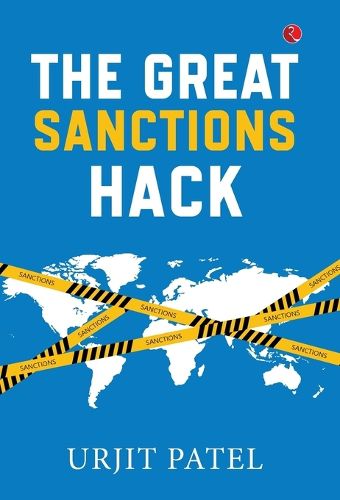
In the 21st century, economic sanctions have become a widely used tool to control geopolitics, with the United States being the largest user of sanctions globally, followed by the European Union. Yet, mounting evidence shows that these measures often fall short of achieving their intended diplomatic outcomes. While sanctions are meant to pressure governments by targeting their economies, the actual impact tends to be slow, complex, and frequently ineffective. In The Great Sanctions Hack, Urjit Patel, former Governor of the Reserve Bank of India, who now serves as Chairman of the National Institute of Public Finance and Policy, evaluates why the concept of sanctions needs a major overhaul. Their broader effects on global markets and unintended consequences for third parties must be considered. Economic damage unfolds gradually, not instantly, and should be tracked in more detailed stages. Moreover, the real cost to individuals, businesses, and global stability needs clearer and more transparent measurement.
Concerns are also rising about the role of international institutions that often fail to fairly assess the consequences of sanctions. This raises questions about their effectiveness in guiding international economic policy.
As global uncertainty grows, a more thoughtful, data-driven, and transparent approach to sanctions is urgently needed.
$9.00 standard shipping within Australia
FREE standard shipping within Australia for orders over $100.00
Express & International shipping calculated at checkout
Stock availability can be subject to change without notice. We recommend calling the shop or contacting our online team to check availability of low stock items. Please see our Shopping Online page for more details.
This title is printed to order. This book may have been self-published. If so, we cannot guarantee the quality of the content. In the main most books will have gone through the editing process however some may not. We therefore suggest that you be aware of this before ordering this book. If in doubt check either the author or publisher’s details as we are unable to accept any returns unless they are faulty. Please contact us if you have any questions.
In the 21st century, economic sanctions have become a widely used tool to control geopolitics, with the United States being the largest user of sanctions globally, followed by the European Union. Yet, mounting evidence shows that these measures often fall short of achieving their intended diplomatic outcomes. While sanctions are meant to pressure governments by targeting their economies, the actual impact tends to be slow, complex, and frequently ineffective. In The Great Sanctions Hack, Urjit Patel, former Governor of the Reserve Bank of India, who now serves as Chairman of the National Institute of Public Finance and Policy, evaluates why the concept of sanctions needs a major overhaul. Their broader effects on global markets and unintended consequences for third parties must be considered. Economic damage unfolds gradually, not instantly, and should be tracked in more detailed stages. Moreover, the real cost to individuals, businesses, and global stability needs clearer and more transparent measurement.
Concerns are also rising about the role of international institutions that often fail to fairly assess the consequences of sanctions. This raises questions about their effectiveness in guiding international economic policy.
As global uncertainty grows, a more thoughtful, data-driven, and transparent approach to sanctions is urgently needed.
Search our extensive online catalogue.
