Readings Newsletter
Become a Readings Member to make your shopping experience even easier.
Sign in or sign up for free!
You’re not far away from qualifying for FREE standard shipping within Australia
You’ve qualified for FREE standard shipping within Australia
The cart is loading…


This title is printed to order. This book may have been self-published. If so, we cannot guarantee the quality of the content. In the main most books will have gone through the editing process however some may not. We therefore suggest that you be aware of this before ordering this book. If in doubt check either the author or publisher’s details as we are unable to accept any returns unless they are faulty. Please contact us if you have any questions.
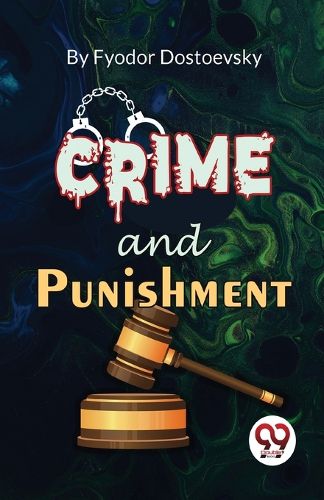
Fyodor Dostoevsky's psychological book "Crime and Punishment" examines the ethical and psychological consequences of committing a crime. The plot centres on Rodion Raskolnikov, an underprivileged young student from St. Petersburg who decides to murder a pawnbroker in order to get her money. Raskolnikov battles guilt and paranoia after the crime, and as he seeks to avoid the repercussions of his conduct, his mental and physical health suffers. Several individuals with connections to Raskolnikov, including as his family, acquaintances, and the police officer looking into the murder, are also followed throughout the story. Dostoevsky explores topics like poverty, morality, redemption, and the essence of justice via his short stories. Raskolnikov finally confesses to the crime and accepts his penalty, which results in his ultimate redemption as he becomes more and more isolated and tortured by his guilt. The book explores the human mind and the effects of moral failings in a nuanced and thoughtful manner. Ultimately, "Crime and Punishment" is a fascinating and challenging book that explores human nature and the effects of our choices, captivating and challenging readers in the process. It is regarded as a masterwork of psychological realism and one of the finest literary works in the Western canon.
$9.00 standard shipping within Australia
FREE standard shipping within Australia for orders over $100.00
Express & International shipping calculated at checkout
Stock availability can be subject to change without notice. We recommend calling the shop or contacting our online team to check availability of low stock items. Please see our Shopping Online page for more details.
This title is printed to order. This book may have been self-published. If so, we cannot guarantee the quality of the content. In the main most books will have gone through the editing process however some may not. We therefore suggest that you be aware of this before ordering this book. If in doubt check either the author or publisher’s details as we are unable to accept any returns unless they are faulty. Please contact us if you have any questions.
Fyodor Dostoevsky's psychological book "Crime and Punishment" examines the ethical and psychological consequences of committing a crime. The plot centres on Rodion Raskolnikov, an underprivileged young student from St. Petersburg who decides to murder a pawnbroker in order to get her money. Raskolnikov battles guilt and paranoia after the crime, and as he seeks to avoid the repercussions of his conduct, his mental and physical health suffers. Several individuals with connections to Raskolnikov, including as his family, acquaintances, and the police officer looking into the murder, are also followed throughout the story. Dostoevsky explores topics like poverty, morality, redemption, and the essence of justice via his short stories. Raskolnikov finally confesses to the crime and accepts his penalty, which results in his ultimate redemption as he becomes more and more isolated and tortured by his guilt. The book explores the human mind and the effects of moral failings in a nuanced and thoughtful manner. Ultimately, "Crime and Punishment" is a fascinating and challenging book that explores human nature and the effects of our choices, captivating and challenging readers in the process. It is regarded as a masterwork of psychological realism and one of the finest literary works in the Western canon.
Search our extensive online catalogue.
