Readings Newsletter
Become a Readings Member to make your shopping experience even easier.
Sign in or sign up for free!
You’re not far away from qualifying for FREE standard shipping within Australia
You’ve qualified for FREE standard shipping within Australia
The cart is loading…


This title is printed to order. This book may have been self-published. If so, we cannot guarantee the quality of the content. In the main most books will have gone through the editing process however some may not. We therefore suggest that you be aware of this before ordering this book. If in doubt check either the author or publisher’s details as we are unable to accept any returns unless they are faulty. Please contact us if you have any questions.
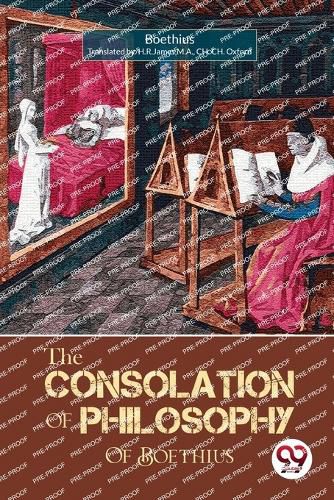
In AD 523, when Boethius was imprisoned for a year as he awaited trial and, eventually, execution for the alleged crime of treason committed under the rule of the Ostrogothic King Theodoric the Great, he wrote On the Consolation of Philosophy.The author appeals to the Muses for assistance in writing poetry that adequately expresses his despair.The "wicked and unprincipled men" who rule Rome sentence, Boethius, to death. Boethius is promised by the philosophy that she would end his suffering, and she informs him that the "medicine" he requires is truth. They talk about Fortune, who they personify as a cruel goddess who arbitrarily moves individuals ahead or lower.The conversation in the book is between the author and a woman who symbolizes philosophy, according to Boethius. She contends that morality is all one possesses because it is unaffected by the ups and downs of life.Boethius talks about the nature of free will and predestination, the issue of evil, human nature, virtue, and justice. He queries if God has free will or if He sees and knows everything. According to Boethius, offenders should be handled with compassion and respect rather than mistreated.
$9.00 standard shipping within Australia
FREE standard shipping within Australia for orders over $100.00
Express & International shipping calculated at checkout
Stock availability can be subject to change without notice. We recommend calling the shop or contacting our online team to check availability of low stock items. Please see our Shopping Online page for more details.
This title is printed to order. This book may have been self-published. If so, we cannot guarantee the quality of the content. In the main most books will have gone through the editing process however some may not. We therefore suggest that you be aware of this before ordering this book. If in doubt check either the author or publisher’s details as we are unable to accept any returns unless they are faulty. Please contact us if you have any questions.
In AD 523, when Boethius was imprisoned for a year as he awaited trial and, eventually, execution for the alleged crime of treason committed under the rule of the Ostrogothic King Theodoric the Great, he wrote On the Consolation of Philosophy.The author appeals to the Muses for assistance in writing poetry that adequately expresses his despair.The "wicked and unprincipled men" who rule Rome sentence, Boethius, to death. Boethius is promised by the philosophy that she would end his suffering, and she informs him that the "medicine" he requires is truth. They talk about Fortune, who they personify as a cruel goddess who arbitrarily moves individuals ahead or lower.The conversation in the book is between the author and a woman who symbolizes philosophy, according to Boethius. She contends that morality is all one possesses because it is unaffected by the ups and downs of life.Boethius talks about the nature of free will and predestination, the issue of evil, human nature, virtue, and justice. He queries if God has free will or if He sees and knows everything. According to Boethius, offenders should be handled with compassion and respect rather than mistreated.
Search our extensive online catalogue.
