Readings Newsletter
Become a Readings Member to make your shopping experience even easier.
Sign in or sign up for free!
You’re not far away from qualifying for FREE standard shipping within Australia
You’ve qualified for FREE standard shipping within Australia
The cart is loading…


This title is printed to order. This book may have been self-published. If so, we cannot guarantee the quality of the content. In the main most books will have gone through the editing process however some may not. We therefore suggest that you be aware of this before ordering this book. If in doubt check either the author or publisher’s details as we are unable to accept any returns unless they are faulty. Please contact us if you have any questions.
From Beginner to Practitioner: A Practical Path to Learning Data Science
Key Features
? Build production-ready data science environments from scratch.
? Learn Python and R through complete, real-world workflows for cleaning, visualizing, and modeling data.
? Learn real-world and practical workflows used by modern data organizations.
Book Description
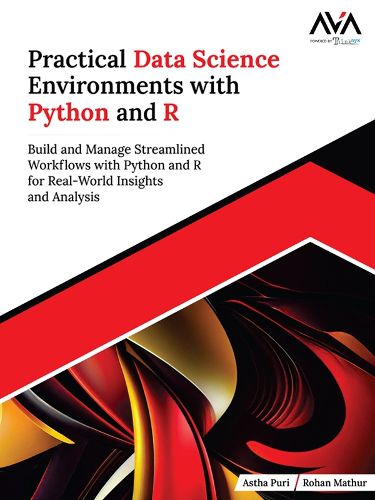
Data science often fails beginners not because of complex algorithms, but because setting up the right tools, environments, and workflows is confusing and poorly explained. Practical Data Science Environments with Python and R fills that gap by focusing on the practical foundations required to work effectively in real data science settings.
You begin by developing a clear understanding of the data science landscape, including how different programming languages, tools, and platforms are used across analytics and machine learning workflows. As you advance, you learn how to import structured and unstructured data, apply systematic cleaning and transformation techniques, and perform exploratory analysis to understand data behavior.
You will implement and evaluate foundational models while learning how to organize code, manage versions with Git, and follow workflows used in professional data teams. The final chapters connect these skills to industry use cases, advanced topics, and next steps, preparing you to continue growing beyond the basics.
What you will learn
? Build complete, reproducible data science environments from scratch.
? Prepare raw data through structured cleaning and transformation processes.
? Apply Python and R workflows for end-to-end data analysis tasks.
? Visualize data to identify patterns and communicate analytical insights.
Table of Contents
An Overview of Data Science
Comparing Programming Languages and Various Environments
Setting Up Data Science Environment
Importing and Cleaning Data in Python and R
Data Wrangling and Manipulation in Python and R
Data Visualization in Python and R
Introduction to Data Science Algorithms
Implementing Machine Learning Models
Version Control with Git
Data Science and Analytics in Industry
Advanced Topics and Next Steps
Index
$9.00 standard shipping within Australia
FREE standard shipping within Australia for orders over $100.00
Express & International shipping calculated at checkout
Stock availability can be subject to change without notice. We recommend calling the shop or contacting our online team to check availability of low stock items. Please see our Shopping Online page for more details.
This title is printed to order. This book may have been self-published. If so, we cannot guarantee the quality of the content. In the main most books will have gone through the editing process however some may not. We therefore suggest that you be aware of this before ordering this book. If in doubt check either the author or publisher’s details as we are unable to accept any returns unless they are faulty. Please contact us if you have any questions.
From Beginner to Practitioner: A Practical Path to Learning Data Science
Key Features
? Build production-ready data science environments from scratch.
? Learn Python and R through complete, real-world workflows for cleaning, visualizing, and modeling data.
? Learn real-world and practical workflows used by modern data organizations.
Book Description
Data science often fails beginners not because of complex algorithms, but because setting up the right tools, environments, and workflows is confusing and poorly explained. Practical Data Science Environments with Python and R fills that gap by focusing on the practical foundations required to work effectively in real data science settings.
You begin by developing a clear understanding of the data science landscape, including how different programming languages, tools, and platforms are used across analytics and machine learning workflows. As you advance, you learn how to import structured and unstructured data, apply systematic cleaning and transformation techniques, and perform exploratory analysis to understand data behavior.
You will implement and evaluate foundational models while learning how to organize code, manage versions with Git, and follow workflows used in professional data teams. The final chapters connect these skills to industry use cases, advanced topics, and next steps, preparing you to continue growing beyond the basics.
What you will learn
? Build complete, reproducible data science environments from scratch.
? Prepare raw data through structured cleaning and transformation processes.
? Apply Python and R workflows for end-to-end data analysis tasks.
? Visualize data to identify patterns and communicate analytical insights.
Table of Contents
An Overview of Data Science
Comparing Programming Languages and Various Environments
Setting Up Data Science Environment
Importing and Cleaning Data in Python and R
Data Wrangling and Manipulation in Python and R
Data Visualization in Python and R
Introduction to Data Science Algorithms
Implementing Machine Learning Models
Version Control with Git
Data Science and Analytics in Industry
Advanced Topics and Next Steps
Index
Search our extensive online catalogue.
