Readings Newsletter
Become a Readings Member to make your shopping experience even easier.
Sign in or sign up for free!
You’re not far away from qualifying for FREE standard shipping within Australia
You’ve qualified for FREE standard shipping within Australia
The cart is loading…


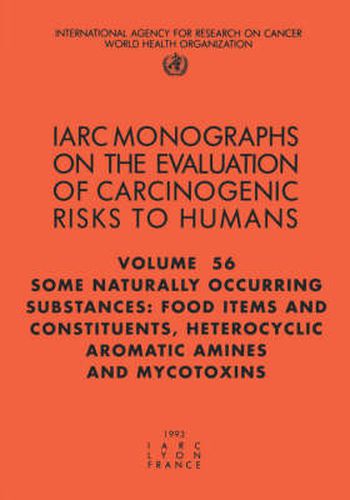
Evaluates the carcinogenic risk to humans posed by the ingestion of several naturally occurring substances. Separate monographs are presented for two food items (salted fish and pickled vegetables), two naturally occurring plant substances (caffeic acid and d-limonene), four heterocyclic aromatic amines found in cooked meat and fish, and selected mycotoxins, including aflatoxins. The monograph on salted fish concentrates on fish as traditionally prepared in southern China, where very high rates of nasopharyngeal carcinoma have been linked to the consumption of salted fish prepared in a manner which involves putrefaction. The monograph concludes that Chinese-style salted fish is carcinogenic to humans. The second monograph concludes that pickled vegetables, prepared according to traditional Asian methods, are possibly carcinogenic to humans. Caffeic acid was judged to be possibly carcinogenic to humans. The report was unable to classify the carcinogenicity of d-limonene. For the heterocyclic aromatic amines present in cooked meat and fish, IQ was classified as probably carcinogenic to humans; MeIQ, MeIQx, and PhIP were classified as possibly carcinogenic. The most extensive monograph, on aflatoxins, concludes that naturally occurring mixtures of aflatoxins are carcinogenic to humans and that aflatoxin M1 occurring in milk is possibly carcinogenic. Toxins derived from Fusarium moniliforme and ochratoxin A, which has been linked to Balkan endemic nephropathy, were classified as possibly carcinogenic to humans. The remaining mycotoxins could not be classified
$9.00 standard shipping within Australia
FREE standard shipping within Australia for orders over $100.00
Express & International shipping calculated at checkout
Stock availability can be subject to change without notice. We recommend calling the shop or contacting our online team to check availability of low stock items. Please see our Shopping Online page for more details.
Evaluates the carcinogenic risk to humans posed by the ingestion of several naturally occurring substances. Separate monographs are presented for two food items (salted fish and pickled vegetables), two naturally occurring plant substances (caffeic acid and d-limonene), four heterocyclic aromatic amines found in cooked meat and fish, and selected mycotoxins, including aflatoxins. The monograph on salted fish concentrates on fish as traditionally prepared in southern China, where very high rates of nasopharyngeal carcinoma have been linked to the consumption of salted fish prepared in a manner which involves putrefaction. The monograph concludes that Chinese-style salted fish is carcinogenic to humans. The second monograph concludes that pickled vegetables, prepared according to traditional Asian methods, are possibly carcinogenic to humans. Caffeic acid was judged to be possibly carcinogenic to humans. The report was unable to classify the carcinogenicity of d-limonene. For the heterocyclic aromatic amines present in cooked meat and fish, IQ was classified as probably carcinogenic to humans; MeIQ, MeIQx, and PhIP were classified as possibly carcinogenic. The most extensive monograph, on aflatoxins, concludes that naturally occurring mixtures of aflatoxins are carcinogenic to humans and that aflatoxin M1 occurring in milk is possibly carcinogenic. Toxins derived from Fusarium moniliforme and ochratoxin A, which has been linked to Balkan endemic nephropathy, were classified as possibly carcinogenic to humans. The remaining mycotoxins could not be classified
Search our extensive online catalogue.
