Readings Newsletter
Become a Readings Member to make your shopping experience even easier.
Sign in or sign up for free!
You’re not far away from qualifying for FREE standard shipping within Australia
You’ve qualified for FREE standard shipping within Australia
The cart is loading…


This title is printed to order. This book may have been self-published. If so, we cannot guarantee the quality of the content. In the main most books will have gone through the editing process however some may not. We therefore suggest that you be aware of this before ordering this book. If in doubt check either the author or publisher’s details as we are unable to accept any returns unless they are faulty. Please contact us if you have any questions.
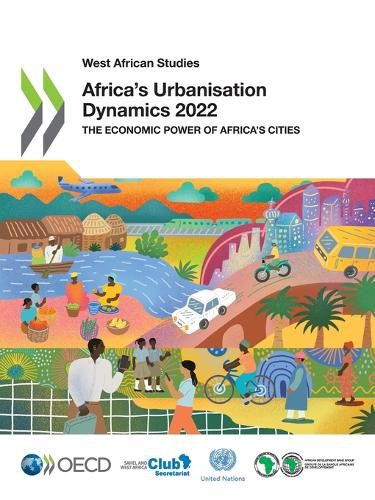
This report provides a new perspective on Africa’s urban economies that is unique in its breadth and level of detail. Based on data from more than 4 million individuals and firms in 2 600 cities across 34 countries, it presents compelling evidence that urbanisation contributes to better economic outcomes and higher living standards. It shows that across most socio-economic dimensions, cities significantly outperform the countries in which they are located. In Africa, urbanisation accounts for approximately 30% of the growth in per capita gross domestic product (GDP) over the past 20 years. Importantly, the gains from urbanisation on economic performance and quality of life extend beyond city boundaries, also benefiting rural areas. The report also shows that transnational clusters of cities are emerging along coasts as well as inland, offering new opportunities for economic development. Based on these findings, the report sets forth policy priorities at national and local levels that are essential to realise the potential of urbanisation. Among these, it argues that the role of cities should be fully anchored in national development planning. Moreover, local governments need greater fiscal and administrative capacity to become key actors in economic development.
$9.00 standard shipping within Australia
FREE standard shipping within Australia for orders over $100.00
Express & International shipping calculated at checkout
Stock availability can be subject to change without notice. We recommend calling the shop or contacting our online team to check availability of low stock items. Please see our Shopping Online page for more details.
This title is printed to order. This book may have been self-published. If so, we cannot guarantee the quality of the content. In the main most books will have gone through the editing process however some may not. We therefore suggest that you be aware of this before ordering this book. If in doubt check either the author or publisher’s details as we are unable to accept any returns unless they are faulty. Please contact us if you have any questions.
This report provides a new perspective on Africa’s urban economies that is unique in its breadth and level of detail. Based on data from more than 4 million individuals and firms in 2 600 cities across 34 countries, it presents compelling evidence that urbanisation contributes to better economic outcomes and higher living standards. It shows that across most socio-economic dimensions, cities significantly outperform the countries in which they are located. In Africa, urbanisation accounts for approximately 30% of the growth in per capita gross domestic product (GDP) over the past 20 years. Importantly, the gains from urbanisation on economic performance and quality of life extend beyond city boundaries, also benefiting rural areas. The report also shows that transnational clusters of cities are emerging along coasts as well as inland, offering new opportunities for economic development. Based on these findings, the report sets forth policy priorities at national and local levels that are essential to realise the potential of urbanisation. Among these, it argues that the role of cities should be fully anchored in national development planning. Moreover, local governments need greater fiscal and administrative capacity to become key actors in economic development.
Search our extensive online catalogue.
