Readings Newsletter
Become a Readings Member to make your shopping experience even easier.
Sign in or sign up for free!
You’re not far away from qualifying for FREE standard shipping within Australia
You’ve qualified for FREE standard shipping within Australia
The cart is loading…


This title is printed to order. This book may have been self-published. If so, we cannot guarantee the quality of the content. In the main most books will have gone through the editing process however some may not. We therefore suggest that you be aware of this before ordering this book. If in doubt check either the author or publisher’s details as we are unable to accept any returns unless they are faulty. Please contact us if you have any questions.
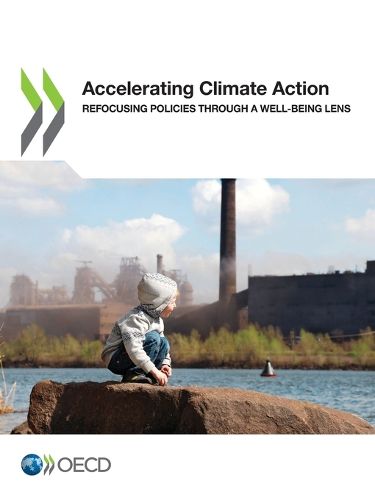
This report builds on the OECD Well-being Framework and applies a new perspective that analyses synergies and trade-offs between climate change mitigation and broader goals such as health, education, jobs, as well as wider environmental quality and the resources needed to sustain our livelihoods through time. This report takes an explicitly political economy approach to the low-emissions transitions needed across five economic sectors (electricity, heavy industry, residential, surface transport, and agriculture) that are responsible for more than 60% of global greenhouse gas emissions. Synergies between emissions reduction and broader well-being objectives, such as reduced air pollution and improved health, increase the incentives for early mitigation action. At the same time, the impact of climate policies on issues such as the affordability of energy and jobs need to be taken into account to counter growing economic and social inequalities within and between countries. The report argues that reframing climate policies using a well-being lens is necessary for making visible such synergies and trade-offs; allowing decision-makers to increase the former and anticipate, manage and minimise the latter. This requires us to rethink societal goals in terms of well-being, reframe our measures of progress and refocus policy-making accordingly.he structural barriers to inclusive growth in the housing market, as well as measures to address the specific housing challenges facing vulnerable groups.
$9.00 standard shipping within Australia
FREE standard shipping within Australia for orders over $100.00
Express & International shipping calculated at checkout
Stock availability can be subject to change without notice. We recommend calling the shop or contacting our online team to check availability of low stock items. Please see our Shopping Online page for more details.
This title is printed to order. This book may have been self-published. If so, we cannot guarantee the quality of the content. In the main most books will have gone through the editing process however some may not. We therefore suggest that you be aware of this before ordering this book. If in doubt check either the author or publisher’s details as we are unable to accept any returns unless they are faulty. Please contact us if you have any questions.
This report builds on the OECD Well-being Framework and applies a new perspective that analyses synergies and trade-offs between climate change mitigation and broader goals such as health, education, jobs, as well as wider environmental quality and the resources needed to sustain our livelihoods through time. This report takes an explicitly political economy approach to the low-emissions transitions needed across five economic sectors (electricity, heavy industry, residential, surface transport, and agriculture) that are responsible for more than 60% of global greenhouse gas emissions. Synergies between emissions reduction and broader well-being objectives, such as reduced air pollution and improved health, increase the incentives for early mitigation action. At the same time, the impact of climate policies on issues such as the affordability of energy and jobs need to be taken into account to counter growing economic and social inequalities within and between countries. The report argues that reframing climate policies using a well-being lens is necessary for making visible such synergies and trade-offs; allowing decision-makers to increase the former and anticipate, manage and minimise the latter. This requires us to rethink societal goals in terms of well-being, reframe our measures of progress and refocus policy-making accordingly.he structural barriers to inclusive growth in the housing market, as well as measures to address the specific housing challenges facing vulnerable groups.
Search our extensive online catalogue.
