Readings Newsletter
Become a Readings Member to make your shopping experience even easier.
Sign in or sign up for free!
You’re not far away from qualifying for FREE standard shipping within Australia
You’ve qualified for FREE standard shipping within Australia
The cart is loading…


This title is printed to order. This book may have been self-published. If so, we cannot guarantee the quality of the content. In the main most books will have gone through the editing process however some may not. We therefore suggest that you be aware of this before ordering this book. If in doubt check either the author or publisher’s details as we are unable to accept any returns unless they are faulty. Please contact us if you have any questions.
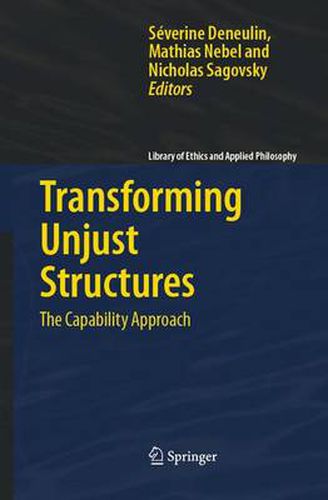
The capability approach of development economist Amartya Sen, who received the Nobel Prize for Economics in 1998, poses a major challenge to the dominant paradigm of neo-classical economics. According to Sen, human well-being does not depend on the consumption of commodities but on the freedoms human beings have reason to choose and value. The capability approach has frequently been criticised for a lack of attention to the ways in which unjust social, political and economic structures restrict human capabilities. The contributors to this volume take up this criticism in a number of ways, both theoretical and practical. The theoretical discussion engages with the thought of Sen himself and with the hermeneutical tradition represented by Paul Ricoeur. The practical discussion consists of five case studies examining the effectiveness of the capability approach in dealing with cases of structural injustice. These cover: racism in South Africa; access to labour markets in Europe; participation in higher education in the UK; poverty and welfare reforms in the US; and biotechnology patents. How effectively, ask all the contributors, can Sen’s capability approach be deployed in the transformation of unjust structures?
$9.00 standard shipping within Australia
FREE standard shipping within Australia for orders over $100.00
Express & International shipping calculated at checkout
Stock availability can be subject to change without notice. We recommend calling the shop or contacting our online team to check availability of low stock items. Please see our Shopping Online page for more details.
This title is printed to order. This book may have been self-published. If so, we cannot guarantee the quality of the content. In the main most books will have gone through the editing process however some may not. We therefore suggest that you be aware of this before ordering this book. If in doubt check either the author or publisher’s details as we are unable to accept any returns unless they are faulty. Please contact us if you have any questions.
The capability approach of development economist Amartya Sen, who received the Nobel Prize for Economics in 1998, poses a major challenge to the dominant paradigm of neo-classical economics. According to Sen, human well-being does not depend on the consumption of commodities but on the freedoms human beings have reason to choose and value. The capability approach has frequently been criticised for a lack of attention to the ways in which unjust social, political and economic structures restrict human capabilities. The contributors to this volume take up this criticism in a number of ways, both theoretical and practical. The theoretical discussion engages with the thought of Sen himself and with the hermeneutical tradition represented by Paul Ricoeur. The practical discussion consists of five case studies examining the effectiveness of the capability approach in dealing with cases of structural injustice. These cover: racism in South Africa; access to labour markets in Europe; participation in higher education in the UK; poverty and welfare reforms in the US; and biotechnology patents. How effectively, ask all the contributors, can Sen’s capability approach be deployed in the transformation of unjust structures?
Search our extensive online catalogue.
