Readings Newsletter
Become a Readings Member to make your shopping experience even easier.
Sign in or sign up for free!
You’re not far away from qualifying for FREE standard shipping within Australia
You’ve qualified for FREE standard shipping within Australia
The cart is loading…


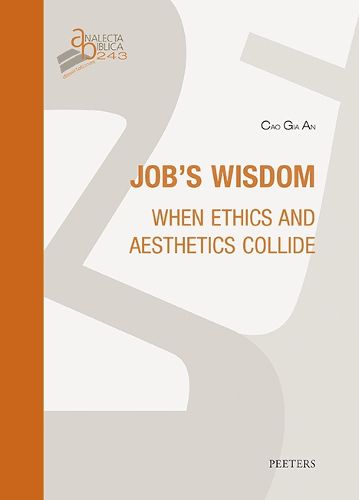
Job's final response to Yhwh, as poetically wrapped up in Job 42:1-6, represents the culmination of Job's transformative journey in his understanding Yhwh and himself. The poem is read in light of its literary framework as an attempt to prove that Job's final stance displays a sapiential attitude which can only be properly understood when one takes into account the collision between the two essential viewpoints supported by the book as a whole, that is, ethics and aesthetics. Throughout the entire drama of Job's situation from the prologue right to the epilogue, the author of the book of Job does not present the protagonist as a penitent, but rather as a righteous sufferer. Job's final stance reflects a sapiential attitude deriving from a direct experience of the righteous sufferer with the aesthetic dimension of the mysterious God.
$9.00 standard shipping within Australia
FREE standard shipping within Australia for orders over $100.00
Express & International shipping calculated at checkout
Stock availability can be subject to change without notice. We recommend calling the shop or contacting our online team to check availability of low stock items. Please see our Shopping Online page for more details.
Job's final response to Yhwh, as poetically wrapped up in Job 42:1-6, represents the culmination of Job's transformative journey in his understanding Yhwh and himself. The poem is read in light of its literary framework as an attempt to prove that Job's final stance displays a sapiential attitude which can only be properly understood when one takes into account the collision between the two essential viewpoints supported by the book as a whole, that is, ethics and aesthetics. Throughout the entire drama of Job's situation from the prologue right to the epilogue, the author of the book of Job does not present the protagonist as a penitent, but rather as a righteous sufferer. Job's final stance reflects a sapiential attitude deriving from a direct experience of the righteous sufferer with the aesthetic dimension of the mysterious God.
Search our extensive online catalogue.
