Readings Newsletter
Become a Readings Member to make your shopping experience even easier.
Sign in or sign up for free!
You’re not far away from qualifying for FREE standard shipping within Australia
You’ve qualified for FREE standard shipping within Australia
The cart is loading…


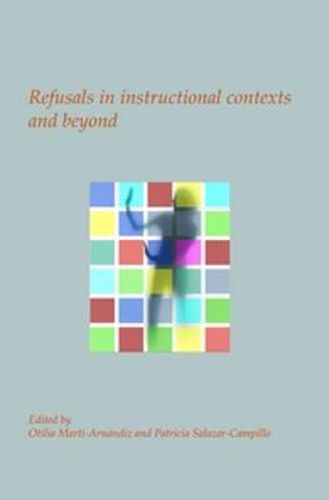
Little exposure and few opportunities for practice are two main drawbacks for learners in instructional contexts. These problems are intensified when dealing with face-threatening acts such as refusals, as learners are not fully capable of expressing their meanings and miscommunication is a likely by-product. The present volume aims at exploring factors and production of refusals in different instructional settings by means of ten original papers which address key questions dealing with the speech act of refusals. The relevance of the volume lies in the individual contributions which embrace innovative perspectives on refusals in order to provide an excellent contribution to this field of enquiry. The book is an obligatory reading for researchers and students interested in the field of interlanguage pragmatics, who will benefit from the range of educational contexts in which refusals are investigated.
$9.00 standard shipping within Australia
FREE standard shipping within Australia for orders over $100.00
Express & International shipping calculated at checkout
Stock availability can be subject to change without notice. We recommend calling the shop or contacting our online team to check availability of low stock items. Please see our Shopping Online page for more details.
Little exposure and few opportunities for practice are two main drawbacks for learners in instructional contexts. These problems are intensified when dealing with face-threatening acts such as refusals, as learners are not fully capable of expressing their meanings and miscommunication is a likely by-product. The present volume aims at exploring factors and production of refusals in different instructional settings by means of ten original papers which address key questions dealing with the speech act of refusals. The relevance of the volume lies in the individual contributions which embrace innovative perspectives on refusals in order to provide an excellent contribution to this field of enquiry. The book is an obligatory reading for researchers and students interested in the field of interlanguage pragmatics, who will benefit from the range of educational contexts in which refusals are investigated.
Search our extensive online catalogue.
