Readings Newsletter
Become a Readings Member to make your shopping experience even easier.
Sign in or sign up for free!
You’re not far away from qualifying for FREE standard shipping within Australia
You’ve qualified for FREE standard shipping within Australia
The cart is loading…


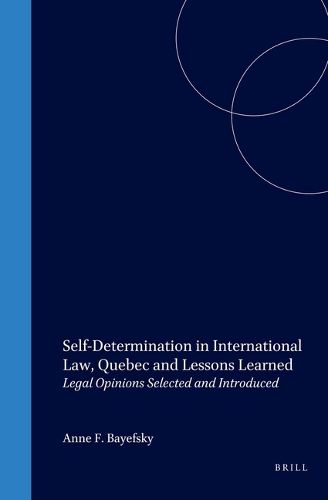
The case of Quebec within Canada, and the Supreme Court of Canada’s case on the legality of secessionist attempts by Quebec, is one example of the tension associated with the relationship between self-determination and a right of secession. The object of the book is to render available to the international community the expert opinions and legal arguments associated with the Supreme Court of Canada’s decision on the Quebec Secession Reference. The questions put to the Court in large part concerned international law, leading the parties to the Reference to seek opinions from international law experts around the world as they prepared their arguments which are presented in this book. Self-determination is an idea rooted in human dignity and its meaning and force parallel the emergence of new understandings of the nature of sovereignty and the role of international law in the protection of human rights. The UN Human Rights Committee has identified self-determination as one of the most awkward principles to define because abuse of this right could jeopardize international peace and security. Self-determination, as formulated by the International Court of Justice, requires a free and genuine expression of the will of the peoples concerned. But serious questions remain about the extent of the relationship between self-determination and a right of secession. Does self-determination legitimate internal self-government, association of some kind with another state, or statehood, and in what contexts?
$9.00 standard shipping within Australia
FREE standard shipping within Australia for orders over $100.00
Express & International shipping calculated at checkout
Stock availability can be subject to change without notice. We recommend calling the shop or contacting our online team to check availability of low stock items. Please see our Shopping Online page for more details.
The case of Quebec within Canada, and the Supreme Court of Canada’s case on the legality of secessionist attempts by Quebec, is one example of the tension associated with the relationship between self-determination and a right of secession. The object of the book is to render available to the international community the expert opinions and legal arguments associated with the Supreme Court of Canada’s decision on the Quebec Secession Reference. The questions put to the Court in large part concerned international law, leading the parties to the Reference to seek opinions from international law experts around the world as they prepared their arguments which are presented in this book. Self-determination is an idea rooted in human dignity and its meaning and force parallel the emergence of new understandings of the nature of sovereignty and the role of international law in the protection of human rights. The UN Human Rights Committee has identified self-determination as one of the most awkward principles to define because abuse of this right could jeopardize international peace and security. Self-determination, as formulated by the International Court of Justice, requires a free and genuine expression of the will of the peoples concerned. But serious questions remain about the extent of the relationship between self-determination and a right of secession. Does self-determination legitimate internal self-government, association of some kind with another state, or statehood, and in what contexts?
Search our extensive online catalogue.
