Readings Newsletter
Become a Readings Member to make your shopping experience even easier.
Sign in or sign up for free!
You’re not far away from qualifying for FREE standard shipping within Australia
You’ve qualified for FREE standard shipping within Australia
The cart is loading…


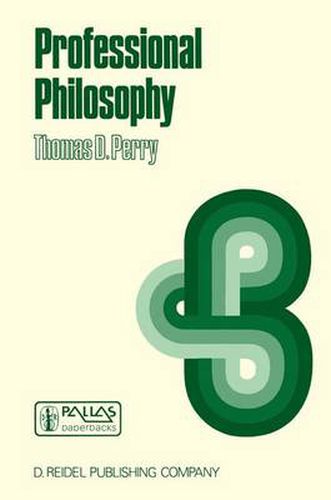
Over the past several decades serious work in philosophy has become almost wholly inaccessible to people who do not specialize in the subject. To be sure, the writings of Aristotle and Kant were never easy reading, and even relatively untechnical philosophers like Mill or Santayana de mand careful study if we are really to understand them. But during the last generation or two the situation has steadily become worse for readers who may want to know what philosophers of their own time are doing. And this is true even though many writers have been learning to avoid the unnecessary jargon that disfigures so much of traditional philosophy. No matter how direct the English style of recent philosophers may be, their methodic purposes and argument style will re main obscure to anyone who has not gone to considerable trouble to be introduced to them. Then too, the closeness of their analysis and the con sequent narrowness of many of the issues pursued make it hard to catch onto the argument without some familiarity with slightly earlier discus sions from which those issues emerged. All of this helps to account for the rather common but false belief that professional philosophy is now only a collection of technical exercises that could hardly be of interest to anyone but the philosophers themselves.
$9.00 standard shipping within Australia
FREE standard shipping within Australia for orders over $100.00
Express & International shipping calculated at checkout
Stock availability can be subject to change without notice. We recommend calling the shop or contacting our online team to check availability of low stock items. Please see our Shopping Online page for more details.
Over the past several decades serious work in philosophy has become almost wholly inaccessible to people who do not specialize in the subject. To be sure, the writings of Aristotle and Kant were never easy reading, and even relatively untechnical philosophers like Mill or Santayana de mand careful study if we are really to understand them. But during the last generation or two the situation has steadily become worse for readers who may want to know what philosophers of their own time are doing. And this is true even though many writers have been learning to avoid the unnecessary jargon that disfigures so much of traditional philosophy. No matter how direct the English style of recent philosophers may be, their methodic purposes and argument style will re main obscure to anyone who has not gone to considerable trouble to be introduced to them. Then too, the closeness of their analysis and the con sequent narrowness of many of the issues pursued make it hard to catch onto the argument without some familiarity with slightly earlier discus sions from which those issues emerged. All of this helps to account for the rather common but false belief that professional philosophy is now only a collection of technical exercises that could hardly be of interest to anyone but the philosophers themselves.
Search our extensive online catalogue.
