Readings Newsletter
Become a Readings Member to make your shopping experience even easier.
Sign in or sign up for free!
You’re not far away from qualifying for FREE standard shipping within Australia
You’ve qualified for FREE standard shipping within Australia
The cart is loading…


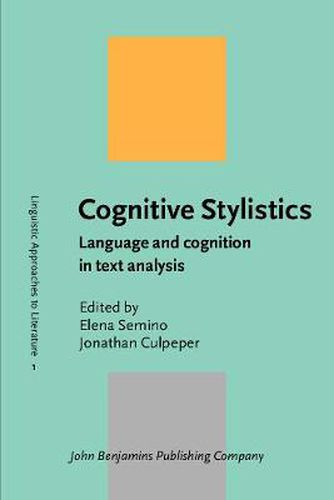
This volume represents the state of the art in cognitive stylistics a rapidly expanding field at the interface between linguistics, literary studies and cognitive science. The 12 chapters combine linguistic analysis with insights from cognitive psychology and cognitive linguistics in order to arrive at innovative accounts of a range of literary and textual phenomena. The chapters cover a variety of literary texts, periods, and genres, including poetry, fictional and non-fictional narratives, and plays. Some of the chapters provide new approaches to phenomena that have a long tradition in literary and linguistic studies (such as humour, characterisation, figurative language, and metre), others focus on phenomena that have not yet received adequate attention (such as split-selves phenomena, mind style, and spatial language). This book is relevant to students and scholars in a wide range of areas within linguistics, literary studies and cognitive science.
$9.00 standard shipping within Australia
FREE standard shipping within Australia for orders over $100.00
Express & International shipping calculated at checkout
Stock availability can be subject to change without notice. We recommend calling the shop or contacting our online team to check availability of low stock items. Please see our Shopping Online page for more details.
This volume represents the state of the art in cognitive stylistics a rapidly expanding field at the interface between linguistics, literary studies and cognitive science. The 12 chapters combine linguistic analysis with insights from cognitive psychology and cognitive linguistics in order to arrive at innovative accounts of a range of literary and textual phenomena. The chapters cover a variety of literary texts, periods, and genres, including poetry, fictional and non-fictional narratives, and plays. Some of the chapters provide new approaches to phenomena that have a long tradition in literary and linguistic studies (such as humour, characterisation, figurative language, and metre), others focus on phenomena that have not yet received adequate attention (such as split-selves phenomena, mind style, and spatial language). This book is relevant to students and scholars in a wide range of areas within linguistics, literary studies and cognitive science.
Search our extensive online catalogue.
