Readings Newsletter
Become a Readings Member to make your shopping experience even easier.
Sign in or sign up for free!
You’re not far away from qualifying for FREE standard shipping within Australia
You’ve qualified for FREE standard shipping within Australia
The cart is loading…


This title is printed to order. This book may have been self-published. If so, we cannot guarantee the quality of the content. In the main most books will have gone through the editing process however some may not. We therefore suggest that you be aware of this before ordering this book. If in doubt check either the author or publisher’s details as we are unable to accept any returns unless they are faulty. Please contact us if you have any questions.
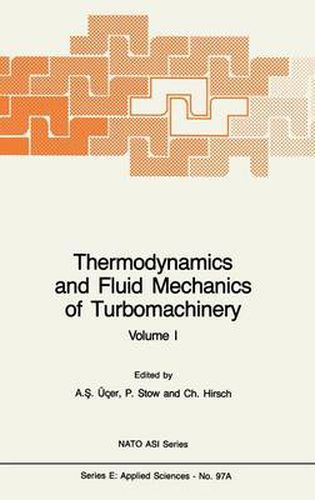
During the last decade, rapid advances have been made in the area of flow analysis in the components of gas turbine engines. Improving the design methods of turbomachine blade rows and under standing of the flow phenomena through them, has become one of the major research topics for aE'rodynamists. This increase of research efforts is due to the need of reducing the weight and fuel consumption of turbojet engines for the same thrust levels. One way of achieving this is to design more efficient components working at high local velocities. Design efforts can lead to desired results only if the details of flow through the blade rows are understood. It is also known that for aircraft propulsion systems development, time and cost can be reduced significantly if the perf ormance can be predicted with conf idence and enough precision. This* generally iK:eds sophisticated two or three dimensional computer codes that can give enough information for design and performance prediction. In the recent years, designers also started to use these sophisticated codes more and more with confidence, in connection with computer aided design and manufacturing techniques. On the other hand, the modelling and solution of flow and the meast
$9.00 standard shipping within Australia
FREE standard shipping within Australia for orders over $100.00
Express & International shipping calculated at checkout
Stock availability can be subject to change without notice. We recommend calling the shop or contacting our online team to check availability of low stock items. Please see our Shopping Online page for more details.
This title is printed to order. This book may have been self-published. If so, we cannot guarantee the quality of the content. In the main most books will have gone through the editing process however some may not. We therefore suggest that you be aware of this before ordering this book. If in doubt check either the author or publisher’s details as we are unable to accept any returns unless they are faulty. Please contact us if you have any questions.
During the last decade, rapid advances have been made in the area of flow analysis in the components of gas turbine engines. Improving the design methods of turbomachine blade rows and under standing of the flow phenomena through them, has become one of the major research topics for aE'rodynamists. This increase of research efforts is due to the need of reducing the weight and fuel consumption of turbojet engines for the same thrust levels. One way of achieving this is to design more efficient components working at high local velocities. Design efforts can lead to desired results only if the details of flow through the blade rows are understood. It is also known that for aircraft propulsion systems development, time and cost can be reduced significantly if the perf ormance can be predicted with conf idence and enough precision. This* generally iK:eds sophisticated two or three dimensional computer codes that can give enough information for design and performance prediction. In the recent years, designers also started to use these sophisticated codes more and more with confidence, in connection with computer aided design and manufacturing techniques. On the other hand, the modelling and solution of flow and the meast
Search our extensive online catalogue.
