Readings Newsletter
Become a Readings Member to make your shopping experience even easier.
Sign in or sign up for free!
You’re not far away from qualifying for FREE standard shipping within Australia
You’ve qualified for FREE standard shipping within Australia
The cart is loading…


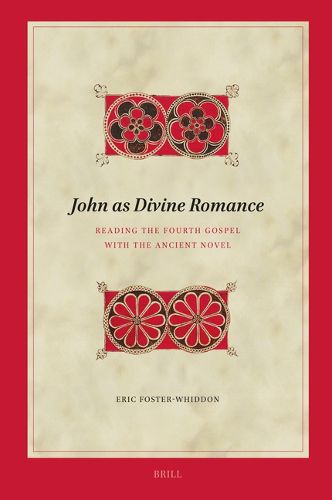
Why does the Gospel of John tell its story of Jesus the way that it does? Informed by semiotic theory, Eric Foster-Whiddon reads the Fourth Gospel in comparison with the Greek novel Callirhoe, observing how recognition, beauty, travel, and love function in both narratives as intertextual frames that pressure the reader to infer meaning. Analysis of these intertextual frames informs a hypothetical recovery of the cultural encyclopedia from which authors and (more importantly for this study) readers in first-century western Asia Minor would draw when composing or interpreting a story like the Gospel of John or Callirhoe.
$9.00 standard shipping within Australia
FREE standard shipping within Australia for orders over $100.00
Express & International shipping calculated at checkout
Stock availability can be subject to change without notice. We recommend calling the shop or contacting our online team to check availability of low stock items. Please see our Shopping Online page for more details.
Why does the Gospel of John tell its story of Jesus the way that it does? Informed by semiotic theory, Eric Foster-Whiddon reads the Fourth Gospel in comparison with the Greek novel Callirhoe, observing how recognition, beauty, travel, and love function in both narratives as intertextual frames that pressure the reader to infer meaning. Analysis of these intertextual frames informs a hypothetical recovery of the cultural encyclopedia from which authors and (more importantly for this study) readers in first-century western Asia Minor would draw when composing or interpreting a story like the Gospel of John or Callirhoe.
Search our extensive online catalogue.
