Readings Newsletter
Become a Readings Member to make your shopping experience even easier.
Sign in or sign up for free!
You’re not far away from qualifying for FREE standard shipping within Australia
You’ve qualified for FREE standard shipping within Australia
The cart is loading…


This title is printed to order. This book may have been self-published. If so, we cannot guarantee the quality of the content. In the main most books will have gone through the editing process however some may not. We therefore suggest that you be aware of this before ordering this book. If in doubt check either the author or publisher’s details as we are unable to accept any returns unless they are faulty. Please contact us if you have any questions.
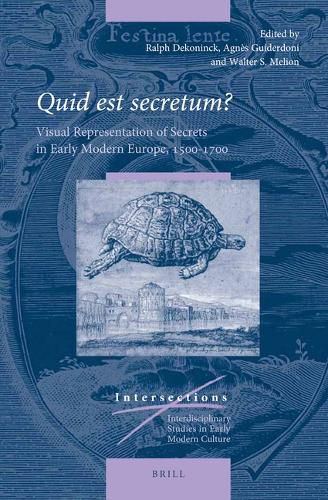
Quid est secretum? Visual Representation of Secrets in Early Modern Europe, 1500-1700 is the companion volume to Intersections 65.1, Quid est sacramentum? Visual Representation of Sacred Mysteries in Early Modern Europe, 1400-1700. Whereas the latter volume focused on sacramental mysteries, the current one examines a wider range of secret subjects. The book examines how secret knowledge was represented visually in ways that both revealed and concealed the true nature of that knowledge, giving and yet impeding access to it. In the early modern period, the discursive and symbolical sites for the representation of secrets were closely related to epistemic changes that transformed conceptions of the transmissibility of knowledge.
Contributors: Monika Biel, Alicja Bielak, C. Jean Campbell, Tom Conley, Ralph Dekoninck, Peter G.F. Eversmann, Ingrid Falque, Agnes Guiderdoni, Koenraad Jonckheere, Suzanne Karr Schmidt, Stephanie Leitch, Carme Lopez Calderon, Mark A. Meadow, Walter S. Melion, Eelco Nagelsmit, Lars Cyril Norgaard, Alexandra Onuf, Bret L. Rothstein, Xavier Vert, Madeleine C. Viljoen, Mara R. Wade, Lee Palmer Wandel, and Caecilie Weissert.
$9.00 standard shipping within Australia
FREE standard shipping within Australia for orders over $100.00
Express & International shipping calculated at checkout
Stock availability can be subject to change without notice. We recommend calling the shop or contacting our online team to check availability of low stock items. Please see our Shopping Online page for more details.
This title is printed to order. This book may have been self-published. If so, we cannot guarantee the quality of the content. In the main most books will have gone through the editing process however some may not. We therefore suggest that you be aware of this before ordering this book. If in doubt check either the author or publisher’s details as we are unable to accept any returns unless they are faulty. Please contact us if you have any questions.
Quid est secretum? Visual Representation of Secrets in Early Modern Europe, 1500-1700 is the companion volume to Intersections 65.1, Quid est sacramentum? Visual Representation of Sacred Mysteries in Early Modern Europe, 1400-1700. Whereas the latter volume focused on sacramental mysteries, the current one examines a wider range of secret subjects. The book examines how secret knowledge was represented visually in ways that both revealed and concealed the true nature of that knowledge, giving and yet impeding access to it. In the early modern period, the discursive and symbolical sites for the representation of secrets were closely related to epistemic changes that transformed conceptions of the transmissibility of knowledge.
Contributors: Monika Biel, Alicja Bielak, C. Jean Campbell, Tom Conley, Ralph Dekoninck, Peter G.F. Eversmann, Ingrid Falque, Agnes Guiderdoni, Koenraad Jonckheere, Suzanne Karr Schmidt, Stephanie Leitch, Carme Lopez Calderon, Mark A. Meadow, Walter S. Melion, Eelco Nagelsmit, Lars Cyril Norgaard, Alexandra Onuf, Bret L. Rothstein, Xavier Vert, Madeleine C. Viljoen, Mara R. Wade, Lee Palmer Wandel, and Caecilie Weissert.
Search our extensive online catalogue.
