Readings Newsletter
Become a Readings Member to make your shopping experience even easier.
Sign in or sign up for free!
You’re not far away from qualifying for FREE standard shipping within Australia
You’ve qualified for FREE standard shipping within Australia
The cart is loading…


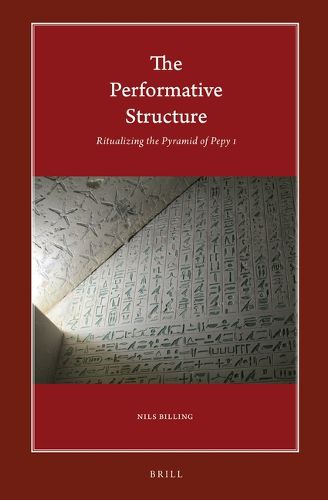
In The Performative Structure: Ritualizing the Pyramid of Pepy I, Nils Billing investigates the ancient Egyptian pyramid complex as a performative structure, ritualized through the operative faculty inherent in monumental architecture, text, and image. The main body of research is given over to an analysis of the Pyramid Texts found in the pyramid of king Pepy I of the Sixth Dynasty (ca 2300 BCE). It is demonstrated that the texts were distributed on distinct space-bound thematic and ritual levels in order to perpetuate a cultic activity from which the lord of the tomb could be transformed by moving through the different chambers and corridors towards the exit. Just as the decoration program of the mortuary temple once delineated the ritual and ideological structure of the royal mortuary cult, the corpus of texts distributed in the pyramid provided a monumentalized performative structure that effectuated the perennial rebirth for its owner.
$9.00 standard shipping within Australia
FREE standard shipping within Australia for orders over $100.00
Express & International shipping calculated at checkout
Stock availability can be subject to change without notice. We recommend calling the shop or contacting our online team to check availability of low stock items. Please see our Shopping Online page for more details.
In The Performative Structure: Ritualizing the Pyramid of Pepy I, Nils Billing investigates the ancient Egyptian pyramid complex as a performative structure, ritualized through the operative faculty inherent in monumental architecture, text, and image. The main body of research is given over to an analysis of the Pyramid Texts found in the pyramid of king Pepy I of the Sixth Dynasty (ca 2300 BCE). It is demonstrated that the texts were distributed on distinct space-bound thematic and ritual levels in order to perpetuate a cultic activity from which the lord of the tomb could be transformed by moving through the different chambers and corridors towards the exit. Just as the decoration program of the mortuary temple once delineated the ritual and ideological structure of the royal mortuary cult, the corpus of texts distributed in the pyramid provided a monumentalized performative structure that effectuated the perennial rebirth for its owner.
Search our extensive online catalogue.
