Readings Newsletter
Become a Readings Member to make your shopping experience even easier.
Sign in or sign up for free!
You’re not far away from qualifying for FREE standard shipping within Australia
You’ve qualified for FREE standard shipping within Australia
The cart is loading…


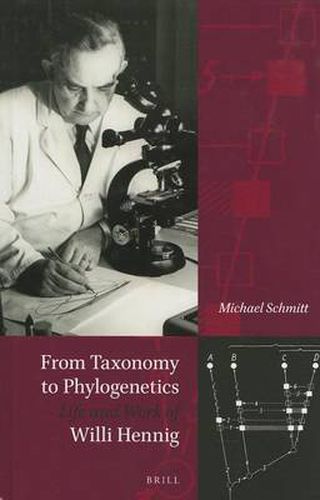
Biological Systematics has changed dramatically during the past 60 years from a handicraft or art to an accepted branch of science proper, due to the work of Willi Hennig, who was born in 1913. The scientific method of reconstructing phylogenetic relationships of organisms bases on Hennig’s approach, the Phylogenetic Systematics . The method is now so widely accepted and applied that it can firmly be regarded a paradigm, named ‘cladistics’. In contrast, the life and personality of its founder is remarkably little known in the scientific community. The present book offers a detailed biography of Willi Hennig, and traces the roots of his thinking from his schooldays until his death in 1976. Some outstanding academic teachers and friends of his are introduced, too. The book offers an insight into the historical development of a ‘scientific revolution’, and highlights the life and the work of a ‘cautious revolutioniser’ in a Germany of dictatorship, war, and separation.
$9.00 standard shipping within Australia
FREE standard shipping within Australia for orders over $100.00
Express & International shipping calculated at checkout
Stock availability can be subject to change without notice. We recommend calling the shop or contacting our online team to check availability of low stock items. Please see our Shopping Online page for more details.
Biological Systematics has changed dramatically during the past 60 years from a handicraft or art to an accepted branch of science proper, due to the work of Willi Hennig, who was born in 1913. The scientific method of reconstructing phylogenetic relationships of organisms bases on Hennig’s approach, the Phylogenetic Systematics . The method is now so widely accepted and applied that it can firmly be regarded a paradigm, named ‘cladistics’. In contrast, the life and personality of its founder is remarkably little known in the scientific community. The present book offers a detailed biography of Willi Hennig, and traces the roots of his thinking from his schooldays until his death in 1976. Some outstanding academic teachers and friends of his are introduced, too. The book offers an insight into the historical development of a ‘scientific revolution’, and highlights the life and the work of a ‘cautious revolutioniser’ in a Germany of dictatorship, war, and separation.
Search our extensive online catalogue.
