Readings Newsletter
Become a Readings Member to make your shopping experience even easier.
Sign in or sign up for free!
You’re not far away from qualifying for FREE standard shipping within Australia
You’ve qualified for FREE standard shipping within Australia
The cart is loading…


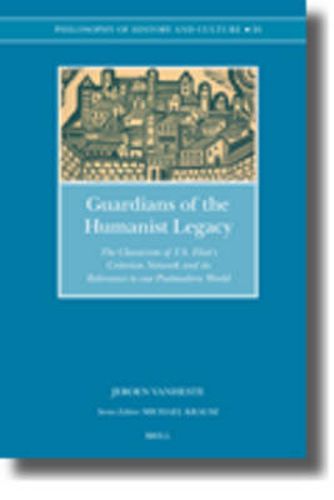
In recent scholarly work, T.S. Eliot has usually been associated with cultural elitism and political conservatism, or even with proto-fascism and anti-Semitism. This book proposes a different view. During the Interbellum, Eliot and his review The Criterion were part of an international network of intellectuals that shared an open-minded Europeanness. Authors like T. Mann, Benda, Ortega y Gasset, Curtius and Hofmannsthal emphasized their common European roots and shared cultural legacy. Their ‘classicism’ stands in the European tradition of humanism and has remained highly relevant. Classicist ideas about literature, education and human culture in general continue to inspire contemporary humanist thinkers, as the second part of this book demonstrates by discussing the work of Ferry, Todorov, Steiner, Scruton, Toulmin and others.
$9.00 standard shipping within Australia
FREE standard shipping within Australia for orders over $100.00
Express & International shipping calculated at checkout
Stock availability can be subject to change without notice. We recommend calling the shop or contacting our online team to check availability of low stock items. Please see our Shopping Online page for more details.
In recent scholarly work, T.S. Eliot has usually been associated with cultural elitism and political conservatism, or even with proto-fascism and anti-Semitism. This book proposes a different view. During the Interbellum, Eliot and his review The Criterion were part of an international network of intellectuals that shared an open-minded Europeanness. Authors like T. Mann, Benda, Ortega y Gasset, Curtius and Hofmannsthal emphasized their common European roots and shared cultural legacy. Their ‘classicism’ stands in the European tradition of humanism and has remained highly relevant. Classicist ideas about literature, education and human culture in general continue to inspire contemporary humanist thinkers, as the second part of this book demonstrates by discussing the work of Ferry, Todorov, Steiner, Scruton, Toulmin and others.
Search our extensive online catalogue.
