Readings Newsletter
Become a Readings Member to make your shopping experience even easier.
Sign in or sign up for free!
You’re not far away from qualifying for FREE standard shipping within Australia
You’ve qualified for FREE standard shipping within Australia
The cart is loading…


This title is printed to order. This book may have been self-published. If so, we cannot guarantee the quality of the content. In the main most books will have gone through the editing process however some may not. We therefore suggest that you be aware of this before ordering this book. If in doubt check either the author or publisher’s details as we are unable to accept any returns unless they are faulty. Please contact us if you have any questions.
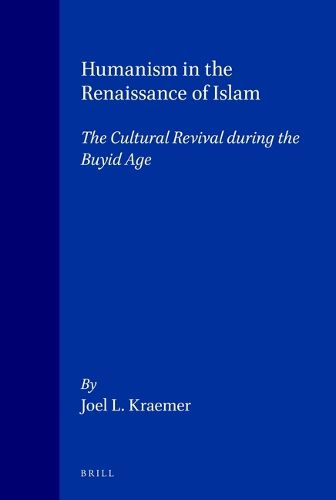
Under the enlightened rule of the Buyid dynasty (945-1055 AD), the Islamic world witnessed an unequalled cultural renaissance. The main expression of this renaissance was a philosophical humanism that embraced the scientific and philosophical heritage of Classical Antiquity as a cultural and educational ideal. Along with this philosophical humanism, a literary humanism was cultivated by litterateurs, poets and government secretaries. This renaissance was marked by a powerful assertion of individualism in the domains of literary creativity and political action. It thrived in a remarkably cosmopolitan atmosphere. Baghdad, the centre of the Abbasid Empire and of Buyid rule, was the rendezvous for scholars from far and wide, of diverse cultural backgrounds. Philosophers belonged to a class of their own, transcending particular loyalties, united by the pursuit of the truth and the love of reason. This work is an investigation into the nature of the environment in which the cultural transformation took place and into the cultural elite who were its bearers. After an extensive introductory section setting the stage, it deals with the main schools and circles and with the outstanding individual representatives of this renaissance.
$9.00 standard shipping within Australia
FREE standard shipping within Australia for orders over $100.00
Express & International shipping calculated at checkout
Stock availability can be subject to change without notice. We recommend calling the shop or contacting our online team to check availability of low stock items. Please see our Shopping Online page for more details.
This title is printed to order. This book may have been self-published. If so, we cannot guarantee the quality of the content. In the main most books will have gone through the editing process however some may not. We therefore suggest that you be aware of this before ordering this book. If in doubt check either the author or publisher’s details as we are unable to accept any returns unless they are faulty. Please contact us if you have any questions.
Under the enlightened rule of the Buyid dynasty (945-1055 AD), the Islamic world witnessed an unequalled cultural renaissance. The main expression of this renaissance was a philosophical humanism that embraced the scientific and philosophical heritage of Classical Antiquity as a cultural and educational ideal. Along with this philosophical humanism, a literary humanism was cultivated by litterateurs, poets and government secretaries. This renaissance was marked by a powerful assertion of individualism in the domains of literary creativity and political action. It thrived in a remarkably cosmopolitan atmosphere. Baghdad, the centre of the Abbasid Empire and of Buyid rule, was the rendezvous for scholars from far and wide, of diverse cultural backgrounds. Philosophers belonged to a class of their own, transcending particular loyalties, united by the pursuit of the truth and the love of reason. This work is an investigation into the nature of the environment in which the cultural transformation took place and into the cultural elite who were its bearers. After an extensive introductory section setting the stage, it deals with the main schools and circles and with the outstanding individual representatives of this renaissance.
Search our extensive online catalogue.
