Readings Newsletter
Become a Readings Member to make your shopping experience even easier.
Sign in or sign up for free!
You’re not far away from qualifying for FREE standard shipping within Australia
You’ve qualified for FREE standard shipping within Australia
The cart is loading…


This title is printed to order. This book may have been self-published. If so, we cannot guarantee the quality of the content. In the main most books will have gone through the editing process however some may not. We therefore suggest that you be aware of this before ordering this book. If in doubt check either the author or publisher’s details as we are unable to accept any returns unless they are faulty. Please contact us if you have any questions.
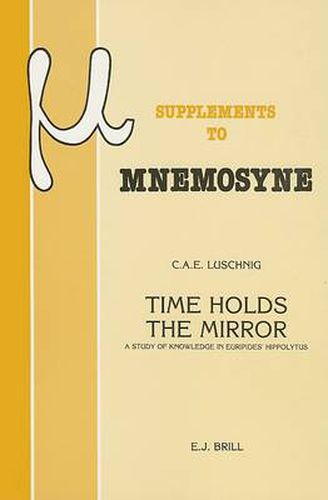
The work is limited to the question of knowledge in Euripides’ Hippolytus and seeks to show that one of the major themes of the Hippolytus, as of the Oedipus, is knowledge. In successive chapters these subjects are treated: (1) the witness theme, seeing and knowing, what the senses reveal; (2) fantasies of other worlds created by the characters and how these fantasies reavel the character’s perceptions of the world; (3) how Euripides causes his characters to become aware of the shifting meanings of words and how it happens that one statement and its opposite can be predicated of the same individual or act; (4) the desire for and fear of knowledge and the choice of ignorance; (5) the use of generalization as a kind of ignorance; (6) the relation of the character’s knowledge to that of the audience. The work offers a new perception of the drama through a detailed examination of this important question that was so warmly debated among the early Sophists.
$9.00 standard shipping within Australia
FREE standard shipping within Australia for orders over $100.00
Express & International shipping calculated at checkout
Stock availability can be subject to change without notice. We recommend calling the shop or contacting our online team to check availability of low stock items. Please see our Shopping Online page for more details.
This title is printed to order. This book may have been self-published. If so, we cannot guarantee the quality of the content. In the main most books will have gone through the editing process however some may not. We therefore suggest that you be aware of this before ordering this book. If in doubt check either the author or publisher’s details as we are unable to accept any returns unless they are faulty. Please contact us if you have any questions.
The work is limited to the question of knowledge in Euripides’ Hippolytus and seeks to show that one of the major themes of the Hippolytus, as of the Oedipus, is knowledge. In successive chapters these subjects are treated: (1) the witness theme, seeing and knowing, what the senses reveal; (2) fantasies of other worlds created by the characters and how these fantasies reavel the character’s perceptions of the world; (3) how Euripides causes his characters to become aware of the shifting meanings of words and how it happens that one statement and its opposite can be predicated of the same individual or act; (4) the desire for and fear of knowledge and the choice of ignorance; (5) the use of generalization as a kind of ignorance; (6) the relation of the character’s knowledge to that of the audience. The work offers a new perception of the drama through a detailed examination of this important question that was so warmly debated among the early Sophists.
Search our extensive online catalogue.
