Readings Newsletter
Become a Readings Member to make your shopping experience even easier.
Sign in or sign up for free!
You’re not far away from qualifying for FREE standard shipping within Australia
You’ve qualified for FREE standard shipping within Australia
The cart is loading…


This title is printed to order. This book may have been self-published. If so, we cannot guarantee the quality of the content. In the main most books will have gone through the editing process however some may not. We therefore suggest that you be aware of this before ordering this book. If in doubt check either the author or publisher’s details as we are unable to accept any returns unless they are faulty. Please contact us if you have any questions.
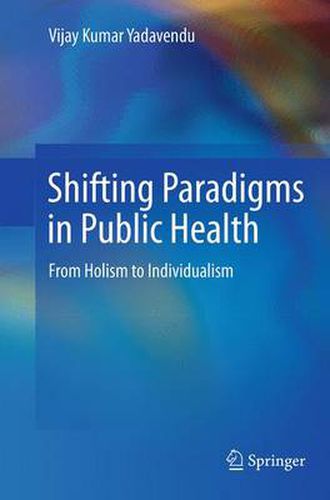
This transdisciplinary volume outlines the development of public health paradigms across the ages in a global context and argues that public health has seemingly lost its raison d'etre, that is, a population perspective. The older, philosophical approach in public health involved a holistic, population-based understanding that emphasized historicity and interrelatedness to study health and disease in their larger socio-economic and political moorings. A newer tradition, which developed in the late 19th century following the acceptance of the germ theory in medicine, created positivist transitions in epidemiology. In the form of risk factors, a reductionist model of health and disease became pervasive in clinical and molecular epidemiology.
The author shows how positivism and the concept of individualism removed from public health thinking the consideration of historical, social and economic influences that shape disease occurrence and the interventions chosen for a population. He states that the neglect of the multifactorial approach in contemporary public health thought has led to growing health inequalities in both the developed and the developing world. He further suggests that the concept of ‘social capital’ in public health, which is being hailed as a resurgence of holism, is in reality a sophisticated and extended version of individualism.
The author presents the negative public policy consequences and implications of adopting methodological individualism through a discussion on AIDS policies. The book strongly argues for a holistic understanding and the incorporation of a rights perspective in public health to bring elements of social justice and fairness in policy formulations.
$9.00 standard shipping within Australia
FREE standard shipping within Australia for orders over $100.00
Express & International shipping calculated at checkout
Stock availability can be subject to change without notice. We recommend calling the shop or contacting our online team to check availability of low stock items. Please see our Shopping Online page for more details.
This title is printed to order. This book may have been self-published. If so, we cannot guarantee the quality of the content. In the main most books will have gone through the editing process however some may not. We therefore suggest that you be aware of this before ordering this book. If in doubt check either the author or publisher’s details as we are unable to accept any returns unless they are faulty. Please contact us if you have any questions.
This transdisciplinary volume outlines the development of public health paradigms across the ages in a global context and argues that public health has seemingly lost its raison d'etre, that is, a population perspective. The older, philosophical approach in public health involved a holistic, population-based understanding that emphasized historicity and interrelatedness to study health and disease in their larger socio-economic and political moorings. A newer tradition, which developed in the late 19th century following the acceptance of the germ theory in medicine, created positivist transitions in epidemiology. In the form of risk factors, a reductionist model of health and disease became pervasive in clinical and molecular epidemiology.
The author shows how positivism and the concept of individualism removed from public health thinking the consideration of historical, social and economic influences that shape disease occurrence and the interventions chosen for a population. He states that the neglect of the multifactorial approach in contemporary public health thought has led to growing health inequalities in both the developed and the developing world. He further suggests that the concept of ‘social capital’ in public health, which is being hailed as a resurgence of holism, is in reality a sophisticated and extended version of individualism.
The author presents the negative public policy consequences and implications of adopting methodological individualism through a discussion on AIDS policies. The book strongly argues for a holistic understanding and the incorporation of a rights perspective in public health to bring elements of social justice and fairness in policy formulations.
Search our extensive online catalogue.
