Readings Newsletter
Become a Readings Member to make your shopping experience even easier.
Sign in or sign up for free!
You’re not far away from qualifying for FREE standard shipping within Australia
You’ve qualified for FREE standard shipping within Australia
The cart is loading…


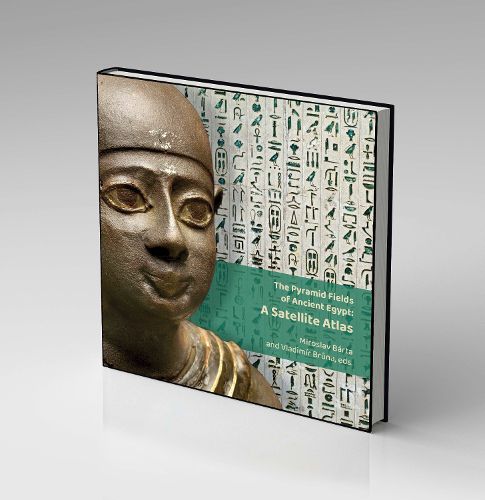
This volume offers a valuable resource by compiling and interpreting high-resolution satellite images of all Old and Middle Kingdom pyramid sites in Egypt. The sites included in this Atlas represent to a large degree the principal sites of the third- through the thirteenth-Dynasty. Their particular characteristics mirror the specific periods of Egyptian history, providing a fascinating window into the incredible story of ancient Egypt.
Sites covered include (starting in the north): Abu Rawash, Giza, Zawiyet el-Aryan, Abusir, Saqqara, Dahshur, Mazghuna, Lisht, Meidum, Lahun, Hawara and Abydos. Also featured is the site of Abu Ghurob, with the two sun temples of Userkaf and Nyuserra of the fifth-Dynasty and the so-called minor step pyramids dating from the late third- to the early fourth-Dynasty. These start in Seila at the northeastern edge of the Faiyum Oasis and include - proceeding those of Zawyet Sultan - Nubt (Naqada), Abydos (Sinki), Hierakonpolis (el-Kula), Edfu (Ghonemeia) and Elephantine.
The individual sites are characterised on the background of their local topography and changing nature of their development over time as reflected by the position of individual monuments, including the principal pyramids of the Old and Middle Kingdom. Each each site provides a different story in terms of its structure and content, reflecting the simple fact that every site developed under different conditions, in different local setting, had its own internal logics, its pace and its genuine characteristics. Each site also reflects a specific historical situation and tells a different story of its development and rediscovery.
Most pyramid fields are increasingly more intensively endangered by modern development and locally-dominated neglect of the need for their preservation. It is strongly believed that the latest technological advances, including the satellite imaging in Egyptology, will ultimately translate into their systematic use in sites’ protection and management, site and landscape analysis and long-term strategies for both ongoing and future excavation and survey projects in Egypt.
$9.00 standard shipping within Australia
FREE standard shipping within Australia for orders over $100.00
Express & International shipping calculated at checkout
Stock availability can be subject to change without notice. We recommend calling the shop or contacting our online team to check availability of low stock items. Please see our Shopping Online page for more details.
This volume offers a valuable resource by compiling and interpreting high-resolution satellite images of all Old and Middle Kingdom pyramid sites in Egypt. The sites included in this Atlas represent to a large degree the principal sites of the third- through the thirteenth-Dynasty. Their particular characteristics mirror the specific periods of Egyptian history, providing a fascinating window into the incredible story of ancient Egypt.
Sites covered include (starting in the north): Abu Rawash, Giza, Zawiyet el-Aryan, Abusir, Saqqara, Dahshur, Mazghuna, Lisht, Meidum, Lahun, Hawara and Abydos. Also featured is the site of Abu Ghurob, with the two sun temples of Userkaf and Nyuserra of the fifth-Dynasty and the so-called minor step pyramids dating from the late third- to the early fourth-Dynasty. These start in Seila at the northeastern edge of the Faiyum Oasis and include - proceeding those of Zawyet Sultan - Nubt (Naqada), Abydos (Sinki), Hierakonpolis (el-Kula), Edfu (Ghonemeia) and Elephantine.
The individual sites are characterised on the background of their local topography and changing nature of their development over time as reflected by the position of individual monuments, including the principal pyramids of the Old and Middle Kingdom. Each each site provides a different story in terms of its structure and content, reflecting the simple fact that every site developed under different conditions, in different local setting, had its own internal logics, its pace and its genuine characteristics. Each site also reflects a specific historical situation and tells a different story of its development and rediscovery.
Most pyramid fields are increasingly more intensively endangered by modern development and locally-dominated neglect of the need for their preservation. It is strongly believed that the latest technological advances, including the satellite imaging in Egyptology, will ultimately translate into their systematic use in sites’ protection and management, site and landscape analysis and long-term strategies for both ongoing and future excavation and survey projects in Egypt.
Search our extensive online catalogue.
