Readings Newsletter
Become a Readings Member to make your shopping experience even easier.
Sign in or sign up for free!
You’re not far away from qualifying for FREE standard shipping within Australia
You’ve qualified for FREE standard shipping within Australia
The cart is loading…


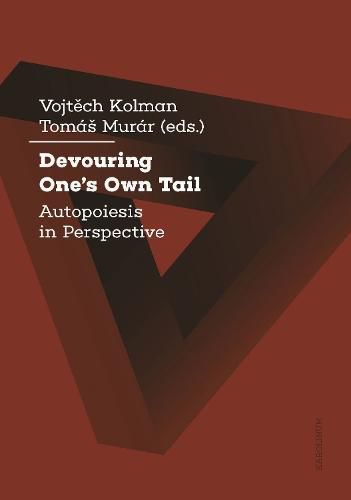
Drawing on continental philosophy, Devouring One’s Own Tail examines culture and society as a type of ouroboros.
Inspired by Niklas Luhmann’s theories on social systems, this book examines the concept of autopoiesis, or self-creation, as it relates to society and culture. Approaching the concept from a variety of fields-philosophy, philology, aesthetics, linguistics, archaeology, and religious and media studies-the contributors present the products of humanity as self-referential, self-sustaining, and self-creating systems. Through four sections, the book addresses the philosophical concept of autopoiesis and its relations to creativity, destruction, and self-organization; autopoiesis in literature and art history; autopoiesis in religion; and autopoiesis in historiography, cognitive linguistics, and social media. Whether exploring Hegel’s theory of knowledge or the viral spread of conspiracy theories on the internet, the authors concentrate on the ouroboros-like nature of their subjects in the ways they feed off of themselves.
$9.00 standard shipping within Australia
FREE standard shipping within Australia for orders over $100.00
Express & International shipping calculated at checkout
Stock availability can be subject to change without notice. We recommend calling the shop or contacting our online team to check availability of low stock items. Please see our Shopping Online page for more details.
Drawing on continental philosophy, Devouring One’s Own Tail examines culture and society as a type of ouroboros.
Inspired by Niklas Luhmann’s theories on social systems, this book examines the concept of autopoiesis, or self-creation, as it relates to society and culture. Approaching the concept from a variety of fields-philosophy, philology, aesthetics, linguistics, archaeology, and religious and media studies-the contributors present the products of humanity as self-referential, self-sustaining, and self-creating systems. Through four sections, the book addresses the philosophical concept of autopoiesis and its relations to creativity, destruction, and self-organization; autopoiesis in literature and art history; autopoiesis in religion; and autopoiesis in historiography, cognitive linguistics, and social media. Whether exploring Hegel’s theory of knowledge or the viral spread of conspiracy theories on the internet, the authors concentrate on the ouroboros-like nature of their subjects in the ways they feed off of themselves.
Search our extensive online catalogue.
