Readings Newsletter
Become a Readings Member to make your shopping experience even easier.
Sign in or sign up for free!
You’re not far away from qualifying for FREE standard shipping within Australia
You’ve qualified for FREE standard shipping within Australia
The cart is loading…


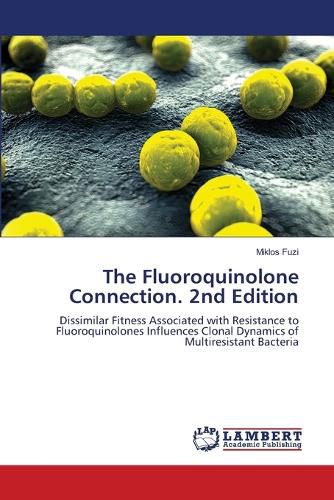
Author falling back on findings published by his group and reviewing data reported by other scientists shows how the extensive use of fluoroquinolones influenced the evolution of various multiresistant pathogens on a global scale. It is demonstrated that most bacteria will suffer enormous fitness costs when developing high-level resistance to fluoroquinolones. However, a few "skillful" groups of pathogens proved capable of evolving favorable mutations conferring high-level resistance to fluoroquinolones with the concomitant preservation of vitality. As these multiresistant "superbugs" have replaced other pathogens in many facilities they also contributed to the deterioration of the general antibiotic resistance status. Though further epidemiological studies are needed the available data strongly suggest that the judicious use of fluoroquinolones could be based on the constant monitoring of the clonal division of local pathogens: if the proportion of "superbugs" is high a reduction in the use of fluoroquinolones should ameliorate the situation, however, when their proportion remains/becomes low the use of fluoroquinolones should be highly beneficial.
$9.00 standard shipping within Australia
FREE standard shipping within Australia for orders over $100.00
Express & International shipping calculated at checkout
Stock availability can be subject to change without notice. We recommend calling the shop or contacting our online team to check availability of low stock items. Please see our Shopping Online page for more details.
Author falling back on findings published by his group and reviewing data reported by other scientists shows how the extensive use of fluoroquinolones influenced the evolution of various multiresistant pathogens on a global scale. It is demonstrated that most bacteria will suffer enormous fitness costs when developing high-level resistance to fluoroquinolones. However, a few "skillful" groups of pathogens proved capable of evolving favorable mutations conferring high-level resistance to fluoroquinolones with the concomitant preservation of vitality. As these multiresistant "superbugs" have replaced other pathogens in many facilities they also contributed to the deterioration of the general antibiotic resistance status. Though further epidemiological studies are needed the available data strongly suggest that the judicious use of fluoroquinolones could be based on the constant monitoring of the clonal division of local pathogens: if the proportion of "superbugs" is high a reduction in the use of fluoroquinolones should ameliorate the situation, however, when their proportion remains/becomes low the use of fluoroquinolones should be highly beneficial.
Search our extensive online catalogue.
