Readings Newsletter
Become a Readings Member to make your shopping experience even easier.
Sign in or sign up for free!
You’re not far away from qualifying for FREE standard shipping within Australia
You’ve qualified for FREE standard shipping within Australia
The cart is loading…


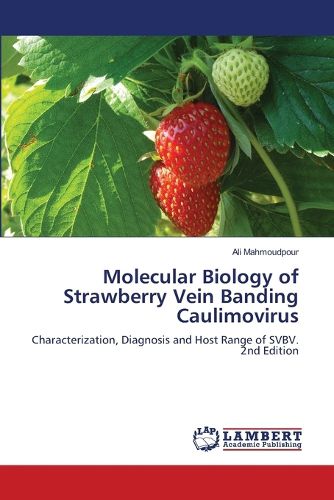
SVBV Strawberry vein banding virus (SVBV), a member of Caulimoviridae, has a double-stranded DNA genome 7.9 kilobase pairs in size, and a spherical particle approximaltely 45 nanometers in diameter. SVBV is transmitted by aphids, as well as by dodder and grafting. It is not sap-transmissible. An important means of virus spread is through the propagation of infected plant materials. The use of certified virus- free plants for generating strawberry seedlings has minimized economic losses caused by SVBV and other strawberry infecting viruses. After demonstrating the infectivity of genomic clone (pSVBV-E3) a new construct using a binary vector was prepared to be used in agroinoculation. This means of inoculation paved the road to confirm many biological characteristics and furthermore expanding host range studies. Sequence data was used to design a sensitive protocol for diagnosis of virus infection through PCR.
$9.00 standard shipping within Australia
FREE standard shipping within Australia for orders over $100.00
Express & International shipping calculated at checkout
Stock availability can be subject to change without notice. We recommend calling the shop or contacting our online team to check availability of low stock items. Please see our Shopping Online page for more details.
SVBV Strawberry vein banding virus (SVBV), a member of Caulimoviridae, has a double-stranded DNA genome 7.9 kilobase pairs in size, and a spherical particle approximaltely 45 nanometers in diameter. SVBV is transmitted by aphids, as well as by dodder and grafting. It is not sap-transmissible. An important means of virus spread is through the propagation of infected plant materials. The use of certified virus- free plants for generating strawberry seedlings has minimized economic losses caused by SVBV and other strawberry infecting viruses. After demonstrating the infectivity of genomic clone (pSVBV-E3) a new construct using a binary vector was prepared to be used in agroinoculation. This means of inoculation paved the road to confirm many biological characteristics and furthermore expanding host range studies. Sequence data was used to design a sensitive protocol for diagnosis of virus infection through PCR.
Search our extensive online catalogue.
