Readings Newsletter
Become a Readings Member to make your shopping experience even easier.
Sign in or sign up for free!
You’re not far away from qualifying for FREE standard shipping within Australia
You’ve qualified for FREE standard shipping within Australia
The cart is loading…


This title is printed to order. This book may have been self-published. If so, we cannot guarantee the quality of the content. In the main most books will have gone through the editing process however some may not. We therefore suggest that you be aware of this before ordering this book. If in doubt check either the author or publisher’s details as we are unable to accept any returns unless they are faulty. Please contact us if you have any questions.
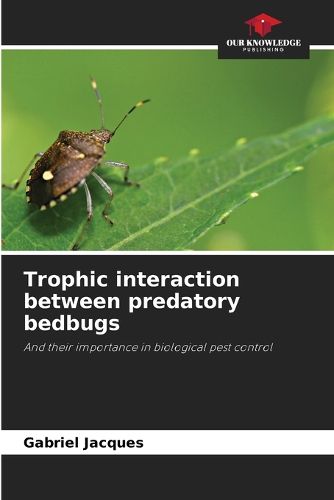
Prey can be consumed more or less by biological control agents and predators have three types of interspecific interactions, (1) synergism, increased mortality of the prey in relation to each natural enemy independently, when the foraging behavior of one species facilitates the capture of the pest by other natural enemies, (2) total mortality of the pest by natural enemies together equals the sum of individual mortality by each, occurring for independent natural enemies, when they prey on different stages of the pest's life or at different times and (3) total mortality of the pest by predators together is less than the sum of individual mortality by predator. The decrease in predation rate may be due to intraguild predation and interspecific competition. Podisus nigrispinus (Dallas) and Supputius cincticeps (Stal) (Heteroptera: Pentatomidae), generalist predators from the Neotropical region of South America, consume and share a wide variety of prey and are not restricted to the lower trophic level, as many can feed on each other in "intraguild predation" and cannibalism.
$9.00 standard shipping within Australia
FREE standard shipping within Australia for orders over $100.00
Express & International shipping calculated at checkout
Stock availability can be subject to change without notice. We recommend calling the shop or contacting our online team to check availability of low stock items. Please see our Shopping Online page for more details.
This title is printed to order. This book may have been self-published. If so, we cannot guarantee the quality of the content. In the main most books will have gone through the editing process however some may not. We therefore suggest that you be aware of this before ordering this book. If in doubt check either the author or publisher’s details as we are unable to accept any returns unless they are faulty. Please contact us if you have any questions.
Prey can be consumed more or less by biological control agents and predators have three types of interspecific interactions, (1) synergism, increased mortality of the prey in relation to each natural enemy independently, when the foraging behavior of one species facilitates the capture of the pest by other natural enemies, (2) total mortality of the pest by natural enemies together equals the sum of individual mortality by each, occurring for independent natural enemies, when they prey on different stages of the pest's life or at different times and (3) total mortality of the pest by predators together is less than the sum of individual mortality by predator. The decrease in predation rate may be due to intraguild predation and interspecific competition. Podisus nigrispinus (Dallas) and Supputius cincticeps (Stal) (Heteroptera: Pentatomidae), generalist predators from the Neotropical region of South America, consume and share a wide variety of prey and are not restricted to the lower trophic level, as many can feed on each other in "intraguild predation" and cannibalism.
Search our extensive online catalogue.
