Readings Newsletter
Become a Readings Member to make your shopping experience even easier.
Sign in or sign up for free!
You’re not far away from qualifying for FREE standard shipping within Australia
You’ve qualified for FREE standard shipping within Australia
The cart is loading…


This title is printed to order. This book may have been self-published. If so, we cannot guarantee the quality of the content. In the main most books will have gone through the editing process however some may not. We therefore suggest that you be aware of this before ordering this book. If in doubt check either the author or publisher’s details as we are unable to accept any returns unless they are faulty. Please contact us if you have any questions.
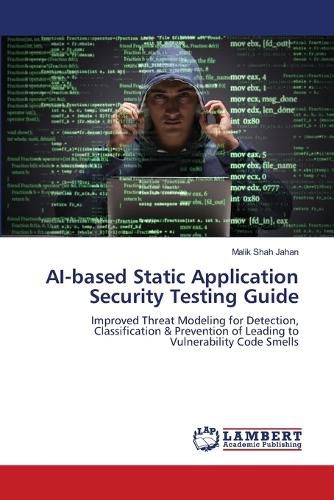
Code smells are usually ignored as they are neither a bug, nor a vulnerability. Quality engineers and, specially, security architects ignore them. As some of the code smells may lead towards vulnerability which may further be exploited by the hackers, therefore, such vulnerable code smells must be considered and further mitigated by threat modelers. In order to provide a repository of such code smells to security designers, a process had been devised and experimented. During the execution, various web applications had been passed through SAST and resulting code smells had been extracted and then inserted into a new dataset via Python. Later on, the code smells deposited in the dataset had been classified into various categories. Finally, machine learning algorithms had been assessed through WEKA and the fastest as well the most accurate algorithm had been selected. Current security standards do not ensure mitigation of threats caused by leading-to-vulnerability code smells, till to date. Typically, threat modelers assess security of a system through modeling threats via CIA, STRIDE and LINDDUN standards on its DFD and various architectural / infrastructural diagrams.
$9.00 standard shipping within Australia
FREE standard shipping within Australia for orders over $100.00
Express & International shipping calculated at checkout
Stock availability can be subject to change without notice. We recommend calling the shop or contacting our online team to check availability of low stock items. Please see our Shopping Online page for more details.
This title is printed to order. This book may have been self-published. If so, we cannot guarantee the quality of the content. In the main most books will have gone through the editing process however some may not. We therefore suggest that you be aware of this before ordering this book. If in doubt check either the author or publisher’s details as we are unable to accept any returns unless they are faulty. Please contact us if you have any questions.
Code smells are usually ignored as they are neither a bug, nor a vulnerability. Quality engineers and, specially, security architects ignore them. As some of the code smells may lead towards vulnerability which may further be exploited by the hackers, therefore, such vulnerable code smells must be considered and further mitigated by threat modelers. In order to provide a repository of such code smells to security designers, a process had been devised and experimented. During the execution, various web applications had been passed through SAST and resulting code smells had been extracted and then inserted into a new dataset via Python. Later on, the code smells deposited in the dataset had been classified into various categories. Finally, machine learning algorithms had been assessed through WEKA and the fastest as well the most accurate algorithm had been selected. Current security standards do not ensure mitigation of threats caused by leading-to-vulnerability code smells, till to date. Typically, threat modelers assess security of a system through modeling threats via CIA, STRIDE and LINDDUN standards on its DFD and various architectural / infrastructural diagrams.
Search our extensive online catalogue.
