Readings Newsletter
Become a Readings Member to make your shopping experience even easier.
Sign in or sign up for free!
You’re not far away from qualifying for FREE standard shipping within Australia
You’ve qualified for FREE standard shipping within Australia
The cart is loading…


This title is printed to order. This book may have been self-published. If so, we cannot guarantee the quality of the content. In the main most books will have gone through the editing process however some may not. We therefore suggest that you be aware of this before ordering this book. If in doubt check either the author or publisher’s details as we are unable to accept any returns unless they are faulty. Please contact us if you have any questions.
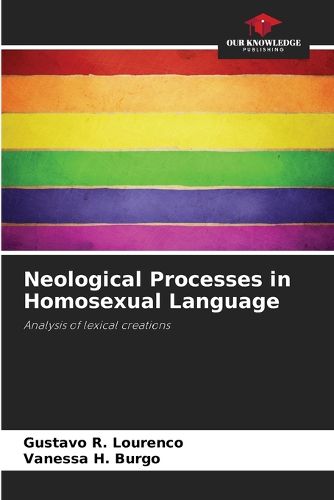
This paper deals with the most recurrent intralinguistic processes in homosexual language, focusing on the neological classification of words incorporated into the group's language. When we consider the panorama of studies on the Portuguese language, we see that certain social groups have a peculiarity in their linguistic code: homosexuals, skinheads and surfers, for example, have their own characteristics when it comes to language. This differentiated linguistic code is also responsible for transmitting a culture and creating a specific social identity for its speakers. Alves (2004) points out that neologisms can be formed by mechanisms originating in the language itself, the autochthonous processes, or by lexical items from other linguistic systems. In this way, studies of neologisms help us to understand these changes that occur within the structure of the language. In this work, we analyze 98 neologisms present in the group's interaction in informal contexts and in the most diverse communicative situations.
$9.00 standard shipping within Australia
FREE standard shipping within Australia for orders over $100.00
Express & International shipping calculated at checkout
Stock availability can be subject to change without notice. We recommend calling the shop or contacting our online team to check availability of low stock items. Please see our Shopping Online page for more details.
This title is printed to order. This book may have been self-published. If so, we cannot guarantee the quality of the content. In the main most books will have gone through the editing process however some may not. We therefore suggest that you be aware of this before ordering this book. If in doubt check either the author or publisher’s details as we are unable to accept any returns unless they are faulty. Please contact us if you have any questions.
This paper deals with the most recurrent intralinguistic processes in homosexual language, focusing on the neological classification of words incorporated into the group's language. When we consider the panorama of studies on the Portuguese language, we see that certain social groups have a peculiarity in their linguistic code: homosexuals, skinheads and surfers, for example, have their own characteristics when it comes to language. This differentiated linguistic code is also responsible for transmitting a culture and creating a specific social identity for its speakers. Alves (2004) points out that neologisms can be formed by mechanisms originating in the language itself, the autochthonous processes, or by lexical items from other linguistic systems. In this way, studies of neologisms help us to understand these changes that occur within the structure of the language. In this work, we analyze 98 neologisms present in the group's interaction in informal contexts and in the most diverse communicative situations.
Search our extensive online catalogue.
