Readings Newsletter
Become a Readings Member to make your shopping experience even easier.
Sign in or sign up for free!
You’re not far away from qualifying for FREE standard shipping within Australia
You’ve qualified for FREE standard shipping within Australia
The cart is loading…


This title is printed to order. This book may have been self-published. If so, we cannot guarantee the quality of the content. In the main most books will have gone through the editing process however some may not. We therefore suggest that you be aware of this before ordering this book. If in doubt check either the author or publisher’s details as we are unable to accept any returns unless they are faulty. Please contact us if you have any questions.
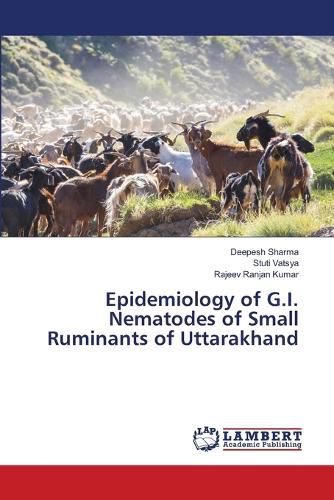
This book contains the epidemiology, bioclimatograph and anthelmintic assessment of gastrointestinal nematodes of sheep and goats of Uttarakhand. The results of epidemiology indicated that sheep and goats were infected with G.I. strongyles throughout the year in both tarai and hill regions of Uttarakhand with the highest prevalence being in rainy season. Bioclimatographs prepared can serve as prediction models to aid in devising management strategies against strongyles. Based on the epidemiological pattern of G.I. nematodes in sheep and goats, it is suggested that they should be treated with anthelmintics once in May/June, August/September and February/March. Both sheep and goats harboured predominantly Haemonchus parasites besides Trichostrongylus, Oesophagostomum, Strongyloides and Bunostomum - which exert negative effects on productivity of animals as suggested by increased weight gains and improvement in haemato-biochemical alterations post-treatment with anthelmintics. These epidemiological findings can thus be utilized in formulating an effective control programme against G.I. nematodosis.
$9.00 standard shipping within Australia
FREE standard shipping within Australia for orders over $100.00
Express & International shipping calculated at checkout
Stock availability can be subject to change without notice. We recommend calling the shop or contacting our online team to check availability of low stock items. Please see our Shopping Online page for more details.
This title is printed to order. This book may have been self-published. If so, we cannot guarantee the quality of the content. In the main most books will have gone through the editing process however some may not. We therefore suggest that you be aware of this before ordering this book. If in doubt check either the author or publisher’s details as we are unable to accept any returns unless they are faulty. Please contact us if you have any questions.
This book contains the epidemiology, bioclimatograph and anthelmintic assessment of gastrointestinal nematodes of sheep and goats of Uttarakhand. The results of epidemiology indicated that sheep and goats were infected with G.I. strongyles throughout the year in both tarai and hill regions of Uttarakhand with the highest prevalence being in rainy season. Bioclimatographs prepared can serve as prediction models to aid in devising management strategies against strongyles. Based on the epidemiological pattern of G.I. nematodes in sheep and goats, it is suggested that they should be treated with anthelmintics once in May/June, August/September and February/March. Both sheep and goats harboured predominantly Haemonchus parasites besides Trichostrongylus, Oesophagostomum, Strongyloides and Bunostomum - which exert negative effects on productivity of animals as suggested by increased weight gains and improvement in haemato-biochemical alterations post-treatment with anthelmintics. These epidemiological findings can thus be utilized in formulating an effective control programme against G.I. nematodosis.
Search our extensive online catalogue.
