Readings Newsletter
Become a Readings Member to make your shopping experience even easier.
Sign in or sign up for free!
You’re not far away from qualifying for FREE standard shipping within Australia
You’ve qualified for FREE standard shipping within Australia
The cart is loading…


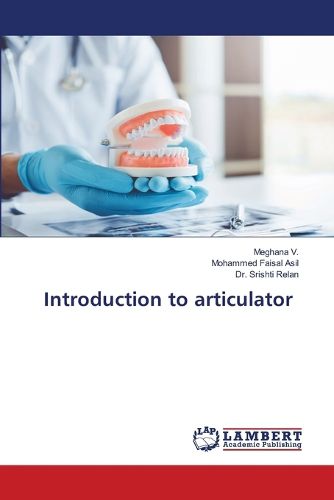
Introduction to Articulators - are mechanical devices used in dentistry to simulate the jaw movements and spatial relationships of the maxilla and mandible. They are essential tools in prosthodontics for fabricating dental restorations such as crowns, bridges, and dentures with functional accuracy. Articulators help replicate mandibular movements like opening, closing, lateral, and protrusive motions, allowing dentists and technicians to evaluate occlusion and plan treatment effectively.There are different types of articulators, classified based on their complexity and the accuracy with which they mimic jaw movements. The main categories include: Non-adjustable: Simple hinge devices that allow basic opening and closing.Semi-adjustable: Can be customized to simulate individual patient movements to some extent.Fully adjustable: Most accurate, allowing precise replication of patient-specific jaw dynamics.Using an articulator improves the quality of prosthetic work, reduces chairside adjustments etc.
$9.00 standard shipping within Australia
FREE standard shipping within Australia for orders over $100.00
Express & International shipping calculated at checkout
Stock availability can be subject to change without notice. We recommend calling the shop or contacting our online team to check availability of low stock items. Please see our Shopping Online page for more details.
Introduction to Articulators - are mechanical devices used in dentistry to simulate the jaw movements and spatial relationships of the maxilla and mandible. They are essential tools in prosthodontics for fabricating dental restorations such as crowns, bridges, and dentures with functional accuracy. Articulators help replicate mandibular movements like opening, closing, lateral, and protrusive motions, allowing dentists and technicians to evaluate occlusion and plan treatment effectively.There are different types of articulators, classified based on their complexity and the accuracy with which they mimic jaw movements. The main categories include: Non-adjustable: Simple hinge devices that allow basic opening and closing.Semi-adjustable: Can be customized to simulate individual patient movements to some extent.Fully adjustable: Most accurate, allowing precise replication of patient-specific jaw dynamics.Using an articulator improves the quality of prosthetic work, reduces chairside adjustments etc.
Search our extensive online catalogue.
