Readings Newsletter
Become a Readings Member to make your shopping experience even easier.
Sign in or sign up for free!
You’re not far away from qualifying for FREE standard shipping within Australia
You’ve qualified for FREE standard shipping within Australia
The cart is loading…


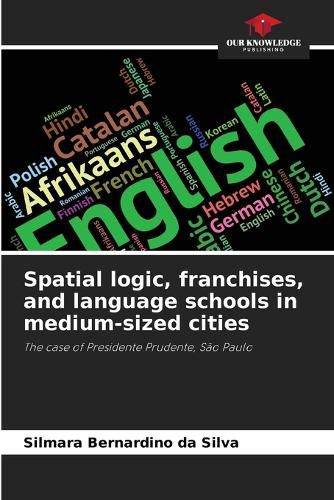
Spatial logics, franchises, and language schools in medium-sized cities aims to contribute to studies in the field of Brazilian urban geography with a focus on medium-sized cities. Recent urbanization dynamics result from the process of economic globalization and the globalization of values, which, although homogenizing cities, never do so completely. Thus, global and local actions coexist, making urban space increasingly complex and altering its material and immaterial structures derived from spatial practices and interactions between form, content, and society. Urban restructuring, which guides changes in the interurban division of labor and, consequently, in the composition of the urban network, has shaped new logics in medium-sized cities and their spaces that articulate, albeit conflictually, with those already consolidated, generating new spatial interactions and composing new urban dynamics, leading to the restructuring of these cities' spaces. Thus, we seek to understand these transformations in medium-sized cities based on the location logic that language schools establish in urban space, revealing part of the interactions between the city and the urban network(s).
$9.00 standard shipping within Australia
FREE standard shipping within Australia for orders over $100.00
Express & International shipping calculated at checkout
Stock availability can be subject to change without notice. We recommend calling the shop or contacting our online team to check availability of low stock items. Please see our Shopping Online page for more details.
Spatial logics, franchises, and language schools in medium-sized cities aims to contribute to studies in the field of Brazilian urban geography with a focus on medium-sized cities. Recent urbanization dynamics result from the process of economic globalization and the globalization of values, which, although homogenizing cities, never do so completely. Thus, global and local actions coexist, making urban space increasingly complex and altering its material and immaterial structures derived from spatial practices and interactions between form, content, and society. Urban restructuring, which guides changes in the interurban division of labor and, consequently, in the composition of the urban network, has shaped new logics in medium-sized cities and their spaces that articulate, albeit conflictually, with those already consolidated, generating new spatial interactions and composing new urban dynamics, leading to the restructuring of these cities' spaces. Thus, we seek to understand these transformations in medium-sized cities based on the location logic that language schools establish in urban space, revealing part of the interactions between the city and the urban network(s).
Search our extensive online catalogue.
