Readings Newsletter
Become a Readings Member to make your shopping experience even easier.
Sign in or sign up for free!
You’re not far away from qualifying for FREE standard shipping within Australia
You’ve qualified for FREE standard shipping within Australia
The cart is loading…


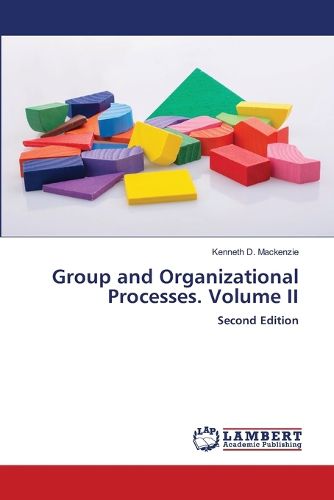
Significant and enduring research questions share this common analytical structure: If the subject matter is denoted by x, then what is the x of x? What are the processes upon which x is defined? This is the second of three integrated and coherent volumes providing powerful new answers. These research questions are addressed in Volume I: group and organizational processes, science, tests, and tasks. Volume II investigates these questions: organizational problem-solving, congruency, interdependence, interdependence uncertainty, management, organizational holograms, power, risk, and structural and processual maladaptations. New theory and methods are developed for each research question. Volume III interprets the first two in order to derive a new theory of organizational leadership which changes how to understand, assess, and improve it. Practitioners and scholars in the fields of business, communications, engineering, management, organization, psychology, and sociology should find these volumes essential.
$9.00 standard shipping within Australia
FREE standard shipping within Australia for orders over $100.00
Express & International shipping calculated at checkout
Stock availability can be subject to change without notice. We recommend calling the shop or contacting our online team to check availability of low stock items. Please see our Shopping Online page for more details.
Significant and enduring research questions share this common analytical structure: If the subject matter is denoted by x, then what is the x of x? What are the processes upon which x is defined? This is the second of three integrated and coherent volumes providing powerful new answers. These research questions are addressed in Volume I: group and organizational processes, science, tests, and tasks. Volume II investigates these questions: organizational problem-solving, congruency, interdependence, interdependence uncertainty, management, organizational holograms, power, risk, and structural and processual maladaptations. New theory and methods are developed for each research question. Volume III interprets the first two in order to derive a new theory of organizational leadership which changes how to understand, assess, and improve it. Practitioners and scholars in the fields of business, communications, engineering, management, organization, psychology, and sociology should find these volumes essential.
Search our extensive online catalogue.
