Readings Newsletter
Become a Readings Member to make your shopping experience even easier.
Sign in or sign up for free!
You’re not far away from qualifying for FREE standard shipping within Australia
You’ve qualified for FREE standard shipping within Australia
The cart is loading…


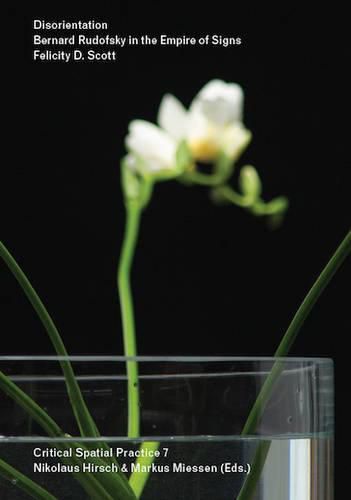
Viennese emigre architect Bernard Rudofsky (1905-1988) is most frequently recalled for curating Architecture without Architects, the famous 1964 photography exhibition of vernacular, preindustrial structures at the Museum of Modern Art in New York. Far from simply a romantic or nostalgic invocation of cultures lost to industrial modernity, Rudofsky’s exhibition drew on decades of speculations about modern architecture and urbanism, particularly their semantic, technological, institutional, commercial, and geopolitical influences.
Focusing on Rudofsky’s encounters with Japan in the 1950s–he described postwar Japan as a rear-view mirror of the American way of life–architectural historian Felicity D. Scott revisits the architect’s readings of the vernacular both in the United States and Japan, which resonate with his attempts to imagine architecture and cities that refused to communicate in a normative sense. In a contemporary world saturated with visual information, Rudofsky’s unconventional musings take on a heightened resonance.
Critical Spatial Practice 7 Edited by Nikolaus Hirsch, Markus Miessen Featuring artwork by Martin Beck
$9.00 standard shipping within Australia
FREE standard shipping within Australia for orders over $100.00
Express & International shipping calculated at checkout
Stock availability can be subject to change without notice. We recommend calling the shop or contacting our online team to check availability of low stock items. Please see our Shopping Online page for more details.
Viennese emigre architect Bernard Rudofsky (1905-1988) is most frequently recalled for curating Architecture without Architects, the famous 1964 photography exhibition of vernacular, preindustrial structures at the Museum of Modern Art in New York. Far from simply a romantic or nostalgic invocation of cultures lost to industrial modernity, Rudofsky’s exhibition drew on decades of speculations about modern architecture and urbanism, particularly their semantic, technological, institutional, commercial, and geopolitical influences.
Focusing on Rudofsky’s encounters with Japan in the 1950s–he described postwar Japan as a rear-view mirror of the American way of life–architectural historian Felicity D. Scott revisits the architect’s readings of the vernacular both in the United States and Japan, which resonate with his attempts to imagine architecture and cities that refused to communicate in a normative sense. In a contemporary world saturated with visual information, Rudofsky’s unconventional musings take on a heightened resonance.
Critical Spatial Practice 7 Edited by Nikolaus Hirsch, Markus Miessen Featuring artwork by Martin Beck
Search our extensive online catalogue.
