Readings Newsletter
Become a Readings Member to make your shopping experience even easier.
Sign in or sign up for free!
You’re not far away from qualifying for FREE standard shipping within Australia
You’ve qualified for FREE standard shipping within Australia
The cart is loading…


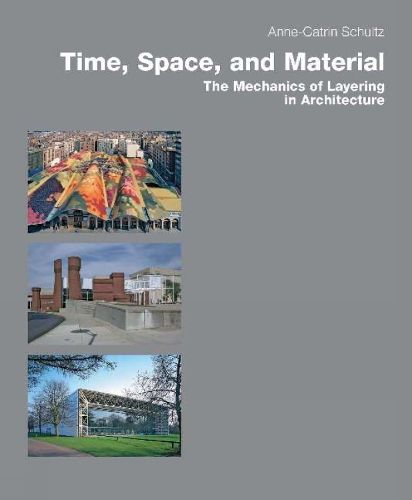
This book examines the application of the principle of layering in architecture, its mechanics, possible application and meaning. Layering is widely used in the discussions of the 20th and 21st centuries architecture but rarely defined or examined. Layering bridges the tectonics of structure and skin, offers a system for the creation of different architectural spaces over time and functions as a design principle without hierarchy. Three types of layering are identified: a chronological sedimentation of planes materializing changes over time (temporal layering), the additive sequence of spaces (spatial layering), and the stratification of individual planes (material layering). Like a palimpsest, historic cities frequently reveal temporal layering and aspects of change over time, a condition familiar to archaeologists who study layer upon layer of remnants of civilisation, including architectural remains and urban organization. In historic cities, one can read at least the most recent layers to determine a physical chronology of the city’s history; contemporary architects add strata of the 21st century. Cities are composed of several layers, offering a complex understanding of time in which a view of the present includes also the perception of the past. At a building scale, layers can be part of the spatial composition, multiple elements of walls, the skin, the structure or decorative and narrative elements. Just as the position and order of geological strata contain information related to their age, formation, and origin, the position and form of architectural layers come with information about their function, intellectual scope, and provenance. The possible elements of such an architectural strategy include materials, light, water, and color as well as associations, memories, and analogies embedded in the layers or in the voids between them. Material layering is based on a perceived separation of spatial enclosures into floor, wall, and ceiling or roof elements and combinations thereof. Individual elements may consist of multiple planes fulfilling a series of specific functions. The architectural enclosure can represent the physical wrapper of a building and might transport the structure’s narrative, tectonic information, cultural expression, the architect’s design intent, and other topics that might be embedded.
$9.00 standard shipping within Australia
FREE standard shipping within Australia for orders over $100.00
Express & International shipping calculated at checkout
Stock availability can be subject to change without notice. We recommend calling the shop or contacting our online team to check availability of low stock items. Please see our Shopping Online page for more details.
This book examines the application of the principle of layering in architecture, its mechanics, possible application and meaning. Layering is widely used in the discussions of the 20th and 21st centuries architecture but rarely defined or examined. Layering bridges the tectonics of structure and skin, offers a system for the creation of different architectural spaces over time and functions as a design principle without hierarchy. Three types of layering are identified: a chronological sedimentation of planes materializing changes over time (temporal layering), the additive sequence of spaces (spatial layering), and the stratification of individual planes (material layering). Like a palimpsest, historic cities frequently reveal temporal layering and aspects of change over time, a condition familiar to archaeologists who study layer upon layer of remnants of civilisation, including architectural remains and urban organization. In historic cities, one can read at least the most recent layers to determine a physical chronology of the city’s history; contemporary architects add strata of the 21st century. Cities are composed of several layers, offering a complex understanding of time in which a view of the present includes also the perception of the past. At a building scale, layers can be part of the spatial composition, multiple elements of walls, the skin, the structure or decorative and narrative elements. Just as the position and order of geological strata contain information related to their age, formation, and origin, the position and form of architectural layers come with information about their function, intellectual scope, and provenance. The possible elements of such an architectural strategy include materials, light, water, and color as well as associations, memories, and analogies embedded in the layers or in the voids between them. Material layering is based on a perceived separation of spatial enclosures into floor, wall, and ceiling or roof elements and combinations thereof. Individual elements may consist of multiple planes fulfilling a series of specific functions. The architectural enclosure can represent the physical wrapper of a building and might transport the structure’s narrative, tectonic information, cultural expression, the architect’s design intent, and other topics that might be embedded.
Search our extensive online catalogue.
