Readings Newsletter
Become a Readings Member to make your shopping experience even easier.
Sign in or sign up for free!
You’re not far away from qualifying for FREE standard shipping within Australia
You’ve qualified for FREE standard shipping within Australia
The cart is loading…


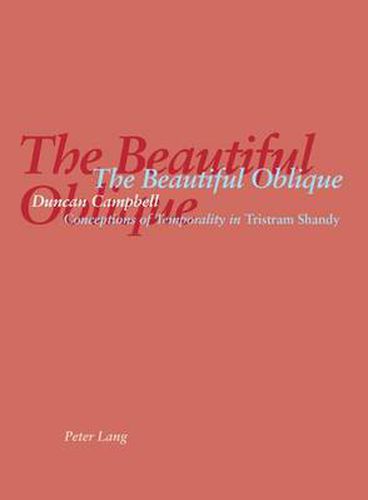
As Samuel Johnson noticed, there has always been something ‘odd’ about Tristram Shandy - a literary autobiography that begins with the narrator’s conception and ends before his birth. However, while time has been recognized as being central to the narrative strategies of Tristram Shandy, the role of time in the novel has rarely been examined in any substantive detail. This book offers the first extended consideration of the representation of time in Tristram Shandy. Its central argument is that the ‘oddness’ of the novel’s formal and typographical experimentation, fragmentation of narrative sequence, destabilization of the autobiographical subject and emphasis on textual materiality derives from a radical conception of temporality. In showing how Tristram Shandy conceives of temporality as an alterity that disrupts both subjectivity and representation, this study not only provides a theoretical commentary on the novel’s temporal experimentation, but also demonstrates the continuing importance of Tristram Shandy for the critical theory of fiction.
$9.00 standard shipping within Australia
FREE standard shipping within Australia for orders over $100.00
Express & International shipping calculated at checkout
Stock availability can be subject to change without notice. We recommend calling the shop or contacting our online team to check availability of low stock items. Please see our Shopping Online page for more details.
As Samuel Johnson noticed, there has always been something ‘odd’ about Tristram Shandy - a literary autobiography that begins with the narrator’s conception and ends before his birth. However, while time has been recognized as being central to the narrative strategies of Tristram Shandy, the role of time in the novel has rarely been examined in any substantive detail. This book offers the first extended consideration of the representation of time in Tristram Shandy. Its central argument is that the ‘oddness’ of the novel’s formal and typographical experimentation, fragmentation of narrative sequence, destabilization of the autobiographical subject and emphasis on textual materiality derives from a radical conception of temporality. In showing how Tristram Shandy conceives of temporality as an alterity that disrupts both subjectivity and representation, this study not only provides a theoretical commentary on the novel’s temporal experimentation, but also demonstrates the continuing importance of Tristram Shandy for the critical theory of fiction.
Search our extensive online catalogue.
