Readings Newsletter
Become a Readings Member to make your shopping experience even easier.
Sign in or sign up for free!
You’re not far away from qualifying for FREE standard shipping within Australia
You’ve qualified for FREE standard shipping within Australia
The cart is loading…


This title is printed to order. This book may have been self-published. If so, we cannot guarantee the quality of the content. In the main most books will have gone through the editing process however some may not. We therefore suggest that you be aware of this before ordering this book. If in doubt check either the author or publisher’s details as we are unable to accept any returns unless they are faulty. Please contact us if you have any questions.
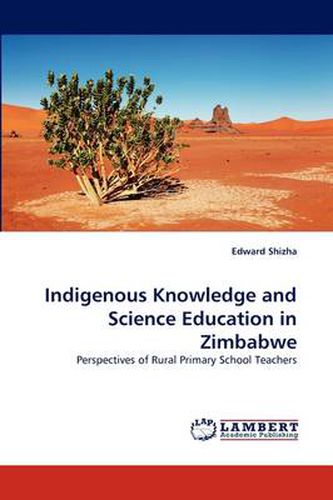
Teachers are gate-keepers in schools. They process what is assumed valid knowledge and how it is taught. The process marginalizes indigenous knowledge and legitimizes western science. This book explores and discusses teachers’ definitions of science and indigenous knowledge, their attitude towards incorporating the latter in science, and pedagogical techniques they use to bridge the cultural gap between science and indigenous knowledge. While teachers are expected to facilitate new knowledge and perspectives in teaching, they are sometimes conservative and resistant to new ideas. Science and indigenous knowledge are cultural and contextual constructs. Teachers should apply this contextual knowledge in their classes and allow students to move hermeneutically between western and indigenous sciences. The book challenges the cultural domination, universalization and rationalization of western science which negates other voices. The constructivist analysis that promotes multiple sciences should be of significant help to teachers, teacher educators, curriculum developers, policy makers, and others interested in promoting intercultural or cross-cultural sciences.
$9.00 standard shipping within Australia
FREE standard shipping within Australia for orders over $100.00
Express & International shipping calculated at checkout
Stock availability can be subject to change without notice. We recommend calling the shop or contacting our online team to check availability of low stock items. Please see our Shopping Online page for more details.
This title is printed to order. This book may have been self-published. If so, we cannot guarantee the quality of the content. In the main most books will have gone through the editing process however some may not. We therefore suggest that you be aware of this before ordering this book. If in doubt check either the author or publisher’s details as we are unable to accept any returns unless they are faulty. Please contact us if you have any questions.
Teachers are gate-keepers in schools. They process what is assumed valid knowledge and how it is taught. The process marginalizes indigenous knowledge and legitimizes western science. This book explores and discusses teachers’ definitions of science and indigenous knowledge, their attitude towards incorporating the latter in science, and pedagogical techniques they use to bridge the cultural gap between science and indigenous knowledge. While teachers are expected to facilitate new knowledge and perspectives in teaching, they are sometimes conservative and resistant to new ideas. Science and indigenous knowledge are cultural and contextual constructs. Teachers should apply this contextual knowledge in their classes and allow students to move hermeneutically between western and indigenous sciences. The book challenges the cultural domination, universalization and rationalization of western science which negates other voices. The constructivist analysis that promotes multiple sciences should be of significant help to teachers, teacher educators, curriculum developers, policy makers, and others interested in promoting intercultural or cross-cultural sciences.
Search our extensive online catalogue.
