Readings Newsletter
Become a Readings Member to make your shopping experience even easier.
Sign in or sign up for free!
You’re not far away from qualifying for FREE standard shipping within Australia
You’ve qualified for FREE standard shipping within Australia
The cart is loading…


This title is printed to order. This book may have been self-published. If so, we cannot guarantee the quality of the content. In the main most books will have gone through the editing process however some may not. We therefore suggest that you be aware of this before ordering this book. If in doubt check either the author or publisher’s details as we are unable to accept any returns unless they are faulty. Please contact us if you have any questions.
Increased intracellular levels of reactive oxygen species (ROS) may result in tissue damage and are therefore associated with various diseases, especially with cancer. Apart from their potentially harmful functions, ROS have been identified as important mediators of essential cellular processes like apoptosis. Antioxidants are the cellular antagonists of ROS and act to neutralize the cytotoxic impact of oxyradicals. In healthy individuals, antioxidant systems serve to maintain intracellular ROS levels below a certain threshold, permitting the functionality of essential ROS-mediated signaling processes but preventing ROS overproduction and potential tissue damage. Even small shifts of the ROS-antioxidant balance may entail serious biological consequences. In the context of ROS-based anti-cancer applications inducing apoptosis, the action of antioxidants may critically influence the outcome of the therapy. Decreased antioxidant capacity that is induced purposefully as a therapeutic strategy may result in an improved anti-cancer action, whereas the external addition of antioxidants may reduce the cytotoxic potential of the therapy.
$9.00 standard shipping within Australia
FREE standard shipping within Australia for orders over $100.00
Express & International shipping calculated at checkout
Stock availability can be subject to change without notice. We recommend calling the shop or contacting our online team to check availability of low stock items. Please see our Shopping Online page for more details.
This title is printed to order. This book may have been self-published. If so, we cannot guarantee the quality of the content. In the main most books will have gone through the editing process however some may not. We therefore suggest that you be aware of this before ordering this book. If in doubt check either the author or publisher’s details as we are unable to accept any returns unless they are faulty. Please contact us if you have any questions.
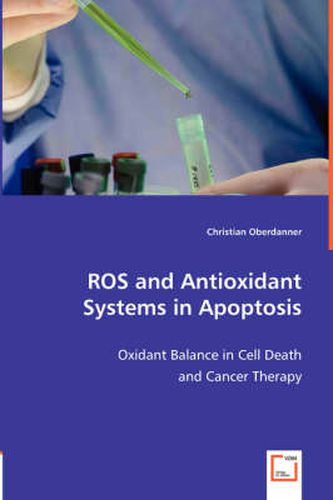
Increased intracellular levels of reactive oxygen species (ROS) may result in tissue damage and are therefore associated with various diseases, especially with cancer. Apart from their potentially harmful functions, ROS have been identified as important mediators of essential cellular processes like apoptosis. Antioxidants are the cellular antagonists of ROS and act to neutralize the cytotoxic impact of oxyradicals. In healthy individuals, antioxidant systems serve to maintain intracellular ROS levels below a certain threshold, permitting the functionality of essential ROS-mediated signaling processes but preventing ROS overproduction and potential tissue damage. Even small shifts of the ROS-antioxidant balance may entail serious biological consequences. In the context of ROS-based anti-cancer applications inducing apoptosis, the action of antioxidants may critically influence the outcome of the therapy. Decreased antioxidant capacity that is induced purposefully as a therapeutic strategy may result in an improved anti-cancer action, whereas the external addition of antioxidants may reduce the cytotoxic potential of the therapy.
Search our extensive online catalogue.
