Readings Newsletter
Become a Readings Member to make your shopping experience even easier.
Sign in or sign up for free!
You’re not far away from qualifying for FREE standard shipping within Australia
You’ve qualified for FREE standard shipping within Australia
The cart is loading…


This title is printed to order. This book may have been self-published. If so, we cannot guarantee the quality of the content. In the main most books will have gone through the editing process however some may not. We therefore suggest that you be aware of this before ordering this book. If in doubt check either the author or publisher’s details as we are unable to accept any returns unless they are faulty. Please contact us if you have any questions.
The effects of chronic illness on children can be temporary or long-term depending on various factors such as complexity of treatment regimens, quality of life, family dynamics and the child’s coping skills. The importance of coping in childhood chronic illness has been extensively studied in the literature. Studies show that play therapy and cognitive-behavioral therapy are both effective strategies in increasing positive coping. The focus of this program is to improve adaptive coping skills in children with pediatric cancer after participating in a manualized cognitive-behavioral play treatment program. Specifically, the treatment protocol will incorporate strategies such as modeling, medical play, cognitive appraisal, relaxation, guided imagery, bibliotherapy, and homework assignments. The efficacy of this program will be evaluated through pre-and post-test measures including the Anxiety Disorders Interview Schedule-4th Edition-Child/Parent Version (ADIS-IV-C), Revised Children’s Manifest Anxiety Scale (RCMAS), Children’s Behavioral Style Scale (CBSS), Child Depression Inventory (CDI), Child Behavior Checklist (CBCL), and the Hamilton Anxiety Rating Scale (HARS).
$9.00 standard shipping within Australia
FREE standard shipping within Australia for orders over $100.00
Express & International shipping calculated at checkout
Stock availability can be subject to change without notice. We recommend calling the shop or contacting our online team to check availability of low stock items. Please see our Shopping Online page for more details.
This title is printed to order. This book may have been self-published. If so, we cannot guarantee the quality of the content. In the main most books will have gone through the editing process however some may not. We therefore suggest that you be aware of this before ordering this book. If in doubt check either the author or publisher’s details as we are unable to accept any returns unless they are faulty. Please contact us if you have any questions.
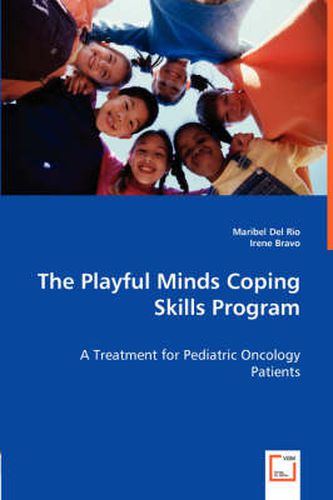
The effects of chronic illness on children can be temporary or long-term depending on various factors such as complexity of treatment regimens, quality of life, family dynamics and the child’s coping skills. The importance of coping in childhood chronic illness has been extensively studied in the literature. Studies show that play therapy and cognitive-behavioral therapy are both effective strategies in increasing positive coping. The focus of this program is to improve adaptive coping skills in children with pediatric cancer after participating in a manualized cognitive-behavioral play treatment program. Specifically, the treatment protocol will incorporate strategies such as modeling, medical play, cognitive appraisal, relaxation, guided imagery, bibliotherapy, and homework assignments. The efficacy of this program will be evaluated through pre-and post-test measures including the Anxiety Disorders Interview Schedule-4th Edition-Child/Parent Version (ADIS-IV-C), Revised Children’s Manifest Anxiety Scale (RCMAS), Children’s Behavioral Style Scale (CBSS), Child Depression Inventory (CDI), Child Behavior Checklist (CBCL), and the Hamilton Anxiety Rating Scale (HARS).
Search our extensive online catalogue.
