Readings Newsletter
Become a Readings Member to make your shopping experience even easier.
Sign in or sign up for free!
You’re not far away from qualifying for FREE standard shipping within Australia
You’ve qualified for FREE standard shipping within Australia
The cart is loading…


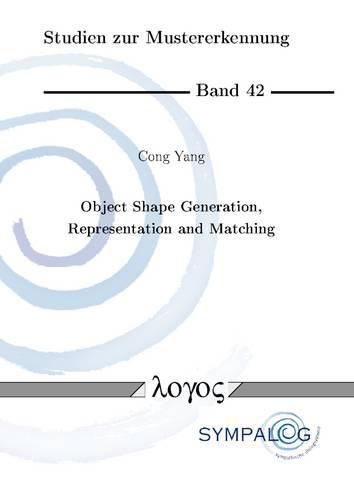
Shape matching and recognition is a fundamental aspect of many problems in computer vision, including object or scene recognition, moving tracking and object detection, etc. While rigid shape matching is relatively well understood, matching shapes undergoing non-rigid deformations remains challenging. Moreover, shape generation is also a challenging task since nearly all approaches face the same difficulty: background clutter. The aim of this book is to propose novel approaches to generate, represent and match object shapes. To achieve this, the following three aspects are particularly explored: Shape generation, shape representation and shape matching. Shape generation is applied based on shape contour detection which is able to locate an object, identify its contour parts, and segment out its contour. Shape representation looks for effective and perceptually important shape features based on either shape boundary or region information. Shape matching aims to calculate the overall similarity (or dissimilarity) between two object shapes. Based on the proposed approaches, two shape-based applications are introduced and assessed.
$9.00 standard shipping within Australia
FREE standard shipping within Australia for orders over $100.00
Express & International shipping calculated at checkout
Stock availability can be subject to change without notice. We recommend calling the shop or contacting our online team to check availability of low stock items. Please see our Shopping Online page for more details.
Shape matching and recognition is a fundamental aspect of many problems in computer vision, including object or scene recognition, moving tracking and object detection, etc. While rigid shape matching is relatively well understood, matching shapes undergoing non-rigid deformations remains challenging. Moreover, shape generation is also a challenging task since nearly all approaches face the same difficulty: background clutter. The aim of this book is to propose novel approaches to generate, represent and match object shapes. To achieve this, the following three aspects are particularly explored: Shape generation, shape representation and shape matching. Shape generation is applied based on shape contour detection which is able to locate an object, identify its contour parts, and segment out its contour. Shape representation looks for effective and perceptually important shape features based on either shape boundary or region information. Shape matching aims to calculate the overall similarity (or dissimilarity) between two object shapes. Based on the proposed approaches, two shape-based applications are introduced and assessed.
Search our extensive online catalogue.
