Readings Newsletter
Become a Readings Member to make your shopping experience even easier.
Sign in or sign up for free!
You’re not far away from qualifying for FREE standard shipping within Australia
You’ve qualified for FREE standard shipping within Australia
The cart is loading…


This title is printed to order. This book may have been self-published. If so, we cannot guarantee the quality of the content. In the main most books will have gone through the editing process however some may not. We therefore suggest that you be aware of this before ordering this book. If in doubt check either the author or publisher’s details as we are unable to accept any returns unless they are faulty. Please contact us if you have any questions.
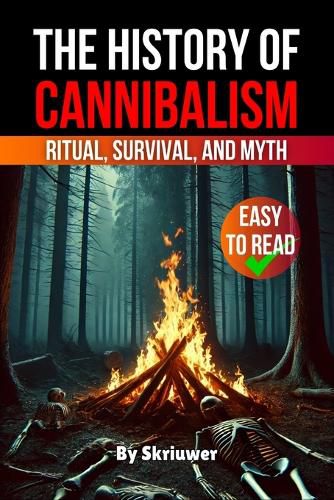
Few topics evoke as much fascination, fear, and intrigue as cannibalism. The History of Cannibalism delves deep into this taboo practice, exploring its roots in prehistoric societies, its role in rituals and survival, and its enduring presence in modern culture. This book provides a comprehensive journey through one of humanity's darkest and most misunderstood chapters, peeling back layers of myth and exaggeration to reveal the truths behind the stories.
Starting with a clear definition and the different forms of cannibalism, this book examines the role it played in ancient cultures, where rituals and traditions often blurred the lines between reverence and survival. From prehistoric Neanderthals to the myths of ritual sacrifice, The History of Cannibalism brings history to life with fascinating case studies and thought-provoking ethical questions. The book also investigates how colonial narratives exaggerated and exploited the image of the "cannibal savage," leaving a lasting impact on cultural perceptions.
In modern times, cannibalism appears in tales of shipwreck survivors, wartime atrocities, and infamous criminal cases. The book also explores its portrayal in literature, film, and folklore, tracing why it continues to capture public imagination. With insights from science, ethics, and sociology, The History of Cannibalism confronts difficult questions: What drives such behavior? How do societies react to it? And why are we so captivated by the idea?
The History of Cannibalism is not just about understanding the past-it challenges readers to reflect on human behavior, morality, and the stories we tell to make sense of our darkest impulses.
$9.00 standard shipping within Australia
FREE standard shipping within Australia for orders over $100.00
Express & International shipping calculated at checkout
Stock availability can be subject to change without notice. We recommend calling the shop or contacting our online team to check availability of low stock items. Please see our Shopping Online page for more details.
This title is printed to order. This book may have been self-published. If so, we cannot guarantee the quality of the content. In the main most books will have gone through the editing process however some may not. We therefore suggest that you be aware of this before ordering this book. If in doubt check either the author or publisher’s details as we are unable to accept any returns unless they are faulty. Please contact us if you have any questions.
Few topics evoke as much fascination, fear, and intrigue as cannibalism. The History of Cannibalism delves deep into this taboo practice, exploring its roots in prehistoric societies, its role in rituals and survival, and its enduring presence in modern culture. This book provides a comprehensive journey through one of humanity's darkest and most misunderstood chapters, peeling back layers of myth and exaggeration to reveal the truths behind the stories.
Starting with a clear definition and the different forms of cannibalism, this book examines the role it played in ancient cultures, where rituals and traditions often blurred the lines between reverence and survival. From prehistoric Neanderthals to the myths of ritual sacrifice, The History of Cannibalism brings history to life with fascinating case studies and thought-provoking ethical questions. The book also investigates how colonial narratives exaggerated and exploited the image of the "cannibal savage," leaving a lasting impact on cultural perceptions.
In modern times, cannibalism appears in tales of shipwreck survivors, wartime atrocities, and infamous criminal cases. The book also explores its portrayal in literature, film, and folklore, tracing why it continues to capture public imagination. With insights from science, ethics, and sociology, The History of Cannibalism confronts difficult questions: What drives such behavior? How do societies react to it? And why are we so captivated by the idea?
The History of Cannibalism is not just about understanding the past-it challenges readers to reflect on human behavior, morality, and the stories we tell to make sense of our darkest impulses.
Search our extensive online catalogue.
