Readings Newsletter
Become a Readings Member to make your shopping experience even easier.
Sign in or sign up for free!
You’re not far away from qualifying for FREE standard shipping within Australia
You’ve qualified for FREE standard shipping within Australia
The cart is loading…


This title is printed to order. This book may have been self-published. If so, we cannot guarantee the quality of the content. In the main most books will have gone through the editing process however some may not. We therefore suggest that you be aware of this before ordering this book. If in doubt check either the author or publisher’s details as we are unable to accept any returns unless they are faulty. Please contact us if you have any questions.
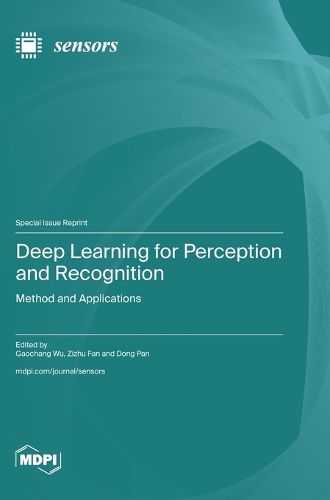
The rapid advancement of deep learning technology has brought about transformative breakthroughs in perception and recognition systems across a wide range of applications. In addition to driving innovation in industrial sectors, it has opened up significant opportunities in fields such as intelligent transportation, smart cities, healthcare, and robotics.
Deep learning significantly enhances the accuracy and robustness of perception and recognition systems through hierarchical feature extraction in multilayer neural networks, achieving remarkable results in areas such as soft sensing, image classification, natural language processing, and object detection. By training on large volumes of labeled data, deep learning algorithms are able to automatically learn complex feature representations and efficiently recognize objects during the perception process.
As application scenarios grow more complex and data become increasingly diverse, deep learning models continue to face significant challenges in solving real-world perception and recognition problems. These challenges include ensuring model generalization when dealing with noisy, imbalanced, or limited data; enhancing performance through self-supervised, few-shot, or transfer learning in cases of insufficient labeled data; integrating information across different scales, dimensions, and modalities.
$9.00 standard shipping within Australia
FREE standard shipping within Australia for orders over $100.00
Express & International shipping calculated at checkout
Stock availability can be subject to change without notice. We recommend calling the shop or contacting our online team to check availability of low stock items. Please see our Shopping Online page for more details.
This title is printed to order. This book may have been self-published. If so, we cannot guarantee the quality of the content. In the main most books will have gone through the editing process however some may not. We therefore suggest that you be aware of this before ordering this book. If in doubt check either the author or publisher’s details as we are unable to accept any returns unless they are faulty. Please contact us if you have any questions.
The rapid advancement of deep learning technology has brought about transformative breakthroughs in perception and recognition systems across a wide range of applications. In addition to driving innovation in industrial sectors, it has opened up significant opportunities in fields such as intelligent transportation, smart cities, healthcare, and robotics.
Deep learning significantly enhances the accuracy and robustness of perception and recognition systems through hierarchical feature extraction in multilayer neural networks, achieving remarkable results in areas such as soft sensing, image classification, natural language processing, and object detection. By training on large volumes of labeled data, deep learning algorithms are able to automatically learn complex feature representations and efficiently recognize objects during the perception process.
As application scenarios grow more complex and data become increasingly diverse, deep learning models continue to face significant challenges in solving real-world perception and recognition problems. These challenges include ensuring model generalization when dealing with noisy, imbalanced, or limited data; enhancing performance through self-supervised, few-shot, or transfer learning in cases of insufficient labeled data; integrating information across different scales, dimensions, and modalities.
Search our extensive online catalogue.
