Readings Newsletter
Become a Readings Member to make your shopping experience even easier.
Sign in or sign up for free!
You’re not far away from qualifying for FREE standard shipping within Australia
You’ve qualified for FREE standard shipping within Australia
The cart is loading…


This title is printed to order. This book may have been self-published. If so, we cannot guarantee the quality of the content. In the main most books will have gone through the editing process however some may not. We therefore suggest that you be aware of this before ordering this book. If in doubt check either the author or publisher’s details as we are unable to accept any returns unless they are faulty. Please contact us if you have any questions.
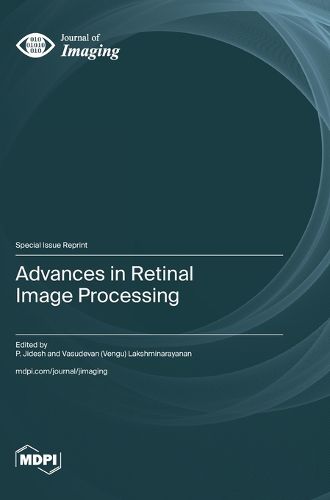
Visual impairment is a primary global challenge in the present era. Lack of awareness, shortage of resources, and a shortage of trained personnel can lead to several retinal disorders, which, in turn, can lead to blindness or severe visual impairment. The human retina is examined through non-invasive procedures such as fundus photography, optical coherence tomography, and fluorescein angiography. From these retinal images, ophthalmologists visually analyze and identify retinal abnormalities associated with various retinal disorders. Automated retinal image analysis is of utmost importance for diagnosing and grading, as well as for monitoring the progression or regression of the disease after surgical and therapeutic intervention. State-of-the-art devices such as portable OCT and smartphone cameras have simplified the acquisition of retinal images to some extent. However, the ever-increasing blind population and the availability of massive computational resources have spurred the urgent need to develop automated retinal imaging applications. The gamut of cutting-edge technologies, such as Artificial Intelligence and deep learning, could be a gateway to resolving these challenges. The domains of retinal image enhancement and registration, multimodal analysis, and multiple disorder detection are in the limelight of retinal imaging. The nine articles in this Special Issue highlight the advancement of retinal imaging applications. The articles in this Special Issue were selected and organized to provide readers with a delightful experience in comprehending the state-of-the-art progress in retinal image processing applications.
$9.00 standard shipping within Australia
FREE standard shipping within Australia for orders over $100.00
Express & International shipping calculated at checkout
Stock availability can be subject to change without notice. We recommend calling the shop or contacting our online team to check availability of low stock items. Please see our Shopping Online page for more details.
This title is printed to order. This book may have been self-published. If so, we cannot guarantee the quality of the content. In the main most books will have gone through the editing process however some may not. We therefore suggest that you be aware of this before ordering this book. If in doubt check either the author or publisher’s details as we are unable to accept any returns unless they are faulty. Please contact us if you have any questions.
Visual impairment is a primary global challenge in the present era. Lack of awareness, shortage of resources, and a shortage of trained personnel can lead to several retinal disorders, which, in turn, can lead to blindness or severe visual impairment. The human retina is examined through non-invasive procedures such as fundus photography, optical coherence tomography, and fluorescein angiography. From these retinal images, ophthalmologists visually analyze and identify retinal abnormalities associated with various retinal disorders. Automated retinal image analysis is of utmost importance for diagnosing and grading, as well as for monitoring the progression or regression of the disease after surgical and therapeutic intervention. State-of-the-art devices such as portable OCT and smartphone cameras have simplified the acquisition of retinal images to some extent. However, the ever-increasing blind population and the availability of massive computational resources have spurred the urgent need to develop automated retinal imaging applications. The gamut of cutting-edge technologies, such as Artificial Intelligence and deep learning, could be a gateway to resolving these challenges. The domains of retinal image enhancement and registration, multimodal analysis, and multiple disorder detection are in the limelight of retinal imaging. The nine articles in this Special Issue highlight the advancement of retinal imaging applications. The articles in this Special Issue were selected and organized to provide readers with a delightful experience in comprehending the state-of-the-art progress in retinal image processing applications.
Search our extensive online catalogue.
