Readings Newsletter
Become a Readings Member to make your shopping experience even easier.
Sign in or sign up for free!
You’re not far away from qualifying for FREE standard shipping within Australia
You’ve qualified for FREE standard shipping within Australia
The cart is loading…


This title is printed to order. This book may have been self-published. If so, we cannot guarantee the quality of the content. In the main most books will have gone through the editing process however some may not. We therefore suggest that you be aware of this before ordering this book. If in doubt check either the author or publisher’s details as we are unable to accept any returns unless they are faulty. Please contact us if you have any questions.
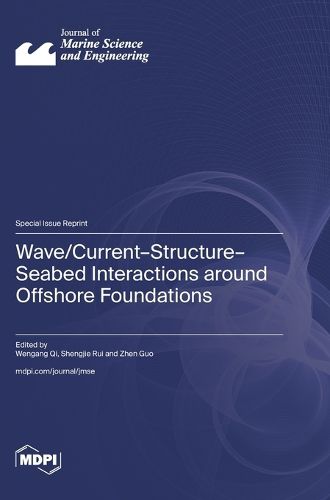
With the global surge in the exploration of ocean resources, there has been a significant increase in the construction of offshore infrastructure, including offshore platforms and wind turbines, over the past few decades. However, these engineering structures are prone to occasional destruction or damage due to harsh offshore environments. Therefore, ensuring the safety of marine infrastructure heavily relies on a profound understanding and comprehensive evaluation of the coupling effects between waves, currents, structures, and the seabed. The primary objective of this Special Issue is to present recent advances in the field of wave/current-structure-seabed interactions around offshore foundations. Authors are encouraged to submit articles that encompass experimental, numerical, theoretical, and applied approaches, aiming to enhance the understanding and refinement of complex physical processes involving waves/currents, foundations, and marine sediments. The scope of this Special Issue encompasses various research areas, including, but not limited to, the following: Fluid-soil-structure interactions around offshore foundations; Scour around offshore foundations; Wave-induced seabed liquefaction; Physical and numerical modeling for geohazard and offshore geotechnics; Hydrodynamic loads on offshore structures; Assessment and mitigation of foundation instabilities; Soil characteristics and constitutive model for marine sediments; Offshore foundation design.
$9.00 standard shipping within Australia
FREE standard shipping within Australia for orders over $100.00
Express & International shipping calculated at checkout
Stock availability can be subject to change without notice. We recommend calling the shop or contacting our online team to check availability of low stock items. Please see our Shopping Online page for more details.
This title is printed to order. This book may have been self-published. If so, we cannot guarantee the quality of the content. In the main most books will have gone through the editing process however some may not. We therefore suggest that you be aware of this before ordering this book. If in doubt check either the author or publisher’s details as we are unable to accept any returns unless they are faulty. Please contact us if you have any questions.
With the global surge in the exploration of ocean resources, there has been a significant increase in the construction of offshore infrastructure, including offshore platforms and wind turbines, over the past few decades. However, these engineering structures are prone to occasional destruction or damage due to harsh offshore environments. Therefore, ensuring the safety of marine infrastructure heavily relies on a profound understanding and comprehensive evaluation of the coupling effects between waves, currents, structures, and the seabed. The primary objective of this Special Issue is to present recent advances in the field of wave/current-structure-seabed interactions around offshore foundations. Authors are encouraged to submit articles that encompass experimental, numerical, theoretical, and applied approaches, aiming to enhance the understanding and refinement of complex physical processes involving waves/currents, foundations, and marine sediments. The scope of this Special Issue encompasses various research areas, including, but not limited to, the following: Fluid-soil-structure interactions around offshore foundations; Scour around offshore foundations; Wave-induced seabed liquefaction; Physical and numerical modeling for geohazard and offshore geotechnics; Hydrodynamic loads on offshore structures; Assessment and mitigation of foundation instabilities; Soil characteristics and constitutive model for marine sediments; Offshore foundation design.
Search our extensive online catalogue.
