Readings Newsletter
Become a Readings Member to make your shopping experience even easier.
Sign in or sign up for free!
You’re not far away from qualifying for FREE standard shipping within Australia
You’ve qualified for FREE standard shipping within Australia
The cart is loading…


This title is printed to order. This book may have been self-published. If so, we cannot guarantee the quality of the content. In the main most books will have gone through the editing process however some may not. We therefore suggest that you be aware of this before ordering this book. If in doubt check either the author or publisher’s details as we are unable to accept any returns unless they are faulty. Please contact us if you have any questions.
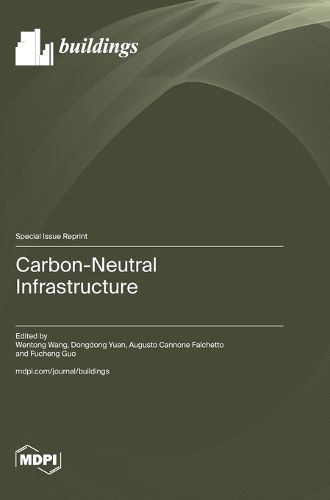
This reprint explores innovative and sustainable solutions for transport infrastructure development under a global carbon-neutral framework. With climate action growing increasingly urgent, nations worldwide are actively pursuing greenhouse gas emission reductions across all sectors. Transportation infrastructure-particularly road systems-represents a major carbon source due to extensive non-renewable resource consumption throughout its lifecycle. As key elements of road systems, asphalt and cement generate significant emissions throughout their lifecycle.
To address these challenges, it is crucial to reduce non-renewable material use, improve construction efficiency, enhance material recycling, and accelerate low-carbon technology deployment. These efforts are vital for reducing transportation's environmental impact while advancing carbon neutrality and sustainable development.
Following circular economy principles, innovative strategies are being implemented to lower the carbon footprint of infrastructure. Key approaches include using industrial by-products as concrete substitutes, developing energy-efficient asphalt technologies like warm-mix and bio-based binders, and optimizing recycling processes. These technologies not only cut emissions but also improve infrastructure durability and lifecycle performance.
$9.00 standard shipping within Australia
FREE standard shipping within Australia for orders over $100.00
Express & International shipping calculated at checkout
Stock availability can be subject to change without notice. We recommend calling the shop or contacting our online team to check availability of low stock items. Please see our Shopping Online page for more details.
This title is printed to order. This book may have been self-published. If so, we cannot guarantee the quality of the content. In the main most books will have gone through the editing process however some may not. We therefore suggest that you be aware of this before ordering this book. If in doubt check either the author or publisher’s details as we are unable to accept any returns unless they are faulty. Please contact us if you have any questions.
This reprint explores innovative and sustainable solutions for transport infrastructure development under a global carbon-neutral framework. With climate action growing increasingly urgent, nations worldwide are actively pursuing greenhouse gas emission reductions across all sectors. Transportation infrastructure-particularly road systems-represents a major carbon source due to extensive non-renewable resource consumption throughout its lifecycle. As key elements of road systems, asphalt and cement generate significant emissions throughout their lifecycle.
To address these challenges, it is crucial to reduce non-renewable material use, improve construction efficiency, enhance material recycling, and accelerate low-carbon technology deployment. These efforts are vital for reducing transportation's environmental impact while advancing carbon neutrality and sustainable development.
Following circular economy principles, innovative strategies are being implemented to lower the carbon footprint of infrastructure. Key approaches include using industrial by-products as concrete substitutes, developing energy-efficient asphalt technologies like warm-mix and bio-based binders, and optimizing recycling processes. These technologies not only cut emissions but also improve infrastructure durability and lifecycle performance.
Search our extensive online catalogue.
