Readings Newsletter
Become a Readings Member to make your shopping experience even easier.
Sign in or sign up for free!
You’re not far away from qualifying for FREE standard shipping within Australia
You’ve qualified for FREE standard shipping within Australia
The cart is loading…


This title is printed to order. This book may have been self-published. If so, we cannot guarantee the quality of the content. In the main most books will have gone through the editing process however some may not. We therefore suggest that you be aware of this before ordering this book. If in doubt check either the author or publisher’s details as we are unable to accept any returns unless they are faulty. Please contact us if you have any questions.
Decoupling economic growth from the depletion of natural resources is paramount to achieving more sustainable development models. As one of the major contributors to anthropogenic environmental impacts, the construction sector must transition toward more efficient and circular practices. In this context, alkali-activated materials offer a unique opportunity to upcycle low-grade resources and industrial by-products into eco-friendly construction materials with excellent technical performance.
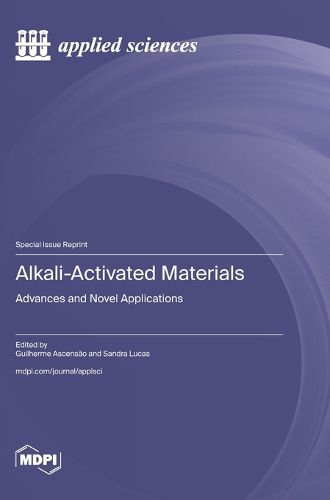
The scientific community has made notable progress in both fundamental and applied research on these materials; however, further exploration remains essential to unlock their full potential. This Reprint of Applied Sciences, entitled "Alkali-Activated Materials: Advances and Novel Applications", brings together significant contributions that reflect both the recent advances and the ongoing challenges in the field.
The contributions collected in this Reprint address a wide range of scientific topics, including the use novel precursors, unconventional additives and reinforcing fibers, mixed design optimization, and innovative processing and curing methods. The contributions made also provide valuable insights into key technical aspects such as mechanical performance, volumetric stability, durability, and self-healing ability, while highlighting emerging applications for alkali-activated materials such as high-temperature resistance and well cementing.
$9.00 standard shipping within Australia
FREE standard shipping within Australia for orders over $100.00
Express & International shipping calculated at checkout
Stock availability can be subject to change without notice. We recommend calling the shop or contacting our online team to check availability of low stock items. Please see our Shopping Online page for more details.
This title is printed to order. This book may have been self-published. If so, we cannot guarantee the quality of the content. In the main most books will have gone through the editing process however some may not. We therefore suggest that you be aware of this before ordering this book. If in doubt check either the author or publisher’s details as we are unable to accept any returns unless they are faulty. Please contact us if you have any questions.
Decoupling economic growth from the depletion of natural resources is paramount to achieving more sustainable development models. As one of the major contributors to anthropogenic environmental impacts, the construction sector must transition toward more efficient and circular practices. In this context, alkali-activated materials offer a unique opportunity to upcycle low-grade resources and industrial by-products into eco-friendly construction materials with excellent technical performance.
The scientific community has made notable progress in both fundamental and applied research on these materials; however, further exploration remains essential to unlock their full potential. This Reprint of Applied Sciences, entitled "Alkali-Activated Materials: Advances and Novel Applications", brings together significant contributions that reflect both the recent advances and the ongoing challenges in the field.
The contributions collected in this Reprint address a wide range of scientific topics, including the use novel precursors, unconventional additives and reinforcing fibers, mixed design optimization, and innovative processing and curing methods. The contributions made also provide valuable insights into key technical aspects such as mechanical performance, volumetric stability, durability, and self-healing ability, while highlighting emerging applications for alkali-activated materials such as high-temperature resistance and well cementing.
Search our extensive online catalogue.
