Readings Newsletter
Become a Readings Member to make your shopping experience even easier.
Sign in or sign up for free!
You’re not far away from qualifying for FREE standard shipping within Australia
You’ve qualified for FREE standard shipping within Australia
The cart is loading…


This title is printed to order. This book may have been self-published. If so, we cannot guarantee the quality of the content. In the main most books will have gone through the editing process however some may not. We therefore suggest that you be aware of this before ordering this book. If in doubt check either the author or publisher’s details as we are unable to accept any returns unless they are faulty. Please contact us if you have any questions.
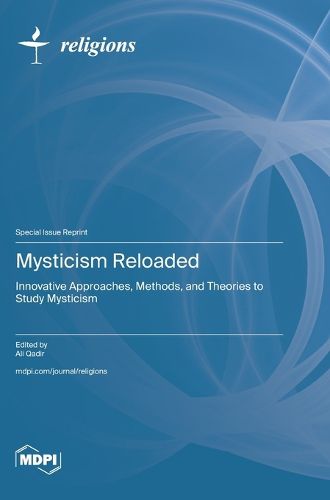
The critical turn in religious studies proved an invaluable, contextual corrective to naive essentializations of the category of mysticism. However, over the past few decades, this left comparative mysticism studies in a state of turmoil. Now, researchers are finding that this added sensitivity does not require abandoning the term altogether, and that we must somehow account for the self-evident similarity and spread of practices and phenomena that may be loosely grouped under the family-resemblance term of "mysticism." Indeed, a post-critique recovery of mysticisms appears to be underway in multiple disciplines and settings.
This Reprint developed as a Special Issue from this post-critique impulse to probe new approaches, methods, and theories to study mysticisms. It invited theoretical, methodological, and empirical research papers from any disciplinary perspective to shed new light on how to study mysticism in any religious or non-religious context.
The papers may be used as independent, disciplinary references but also collectively by comparative mysticism scholars and advanced students. Contributions to the Reprint all relate to the general and comparative category of mysticism, but with light hands, so to speak. Above all, the papers all assume, if it may be put that way, a mysticality, a sense by which we can grasp something of what mystics say, even though those experiences might be ineffable and we do not (or cannot) have immediate access to what mystics claim. It is with this post-critique approach to mysticism that this Reprint seeks to contribute to the field and encourage further studies.
$9.00 standard shipping within Australia
FREE standard shipping within Australia for orders over $100.00
Express & International shipping calculated at checkout
Stock availability can be subject to change without notice. We recommend calling the shop or contacting our online team to check availability of low stock items. Please see our Shopping Online page for more details.
This title is printed to order. This book may have been self-published. If so, we cannot guarantee the quality of the content. In the main most books will have gone through the editing process however some may not. We therefore suggest that you be aware of this before ordering this book. If in doubt check either the author or publisher’s details as we are unable to accept any returns unless they are faulty. Please contact us if you have any questions.
The critical turn in religious studies proved an invaluable, contextual corrective to naive essentializations of the category of mysticism. However, over the past few decades, this left comparative mysticism studies in a state of turmoil. Now, researchers are finding that this added sensitivity does not require abandoning the term altogether, and that we must somehow account for the self-evident similarity and spread of practices and phenomena that may be loosely grouped under the family-resemblance term of "mysticism." Indeed, a post-critique recovery of mysticisms appears to be underway in multiple disciplines and settings.
This Reprint developed as a Special Issue from this post-critique impulse to probe new approaches, methods, and theories to study mysticisms. It invited theoretical, methodological, and empirical research papers from any disciplinary perspective to shed new light on how to study mysticism in any religious or non-religious context.
The papers may be used as independent, disciplinary references but also collectively by comparative mysticism scholars and advanced students. Contributions to the Reprint all relate to the general and comparative category of mysticism, but with light hands, so to speak. Above all, the papers all assume, if it may be put that way, a mysticality, a sense by which we can grasp something of what mystics say, even though those experiences might be ineffable and we do not (or cannot) have immediate access to what mystics claim. It is with this post-critique approach to mysticism that this Reprint seeks to contribute to the field and encourage further studies.
Search our extensive online catalogue.
