Readings Newsletter
Become a Readings Member to make your shopping experience even easier.
Sign in or sign up for free!
You’re not far away from qualifying for FREE standard shipping within Australia
You’ve qualified for FREE standard shipping within Australia
The cart is loading…


This title is printed to order. This book may have been self-published. If so, we cannot guarantee the quality of the content. In the main most books will have gone through the editing process however some may not. We therefore suggest that you be aware of this before ordering this book. If in doubt check either the author or publisher’s details as we are unable to accept any returns unless they are faulty. Please contact us if you have any questions.
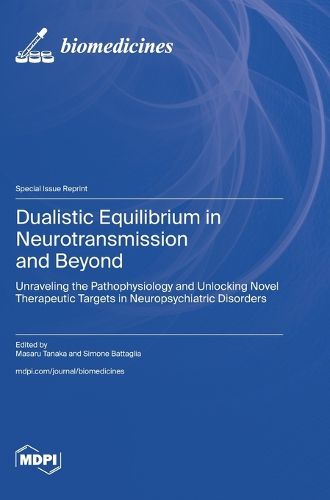
How does the brain keep its chemical yin-yang balanced, and what happens when that homeostasis slips? This Reprint distills the Special Issue "Dualistic Equilibrium in Neurotransmission and Beyond: Unraveling the Pathophysiology and Unlocking Novel Therapeutic Targets in Neuropsychiatric Disorders" into a thematic tour of modern neurobiology. The opening editorial reframes depression, dementia and allied syndromes as failures of the excitation-inhibition handshake that spans synapse, glia, gut, and immune system. Eight peer-reviewed contributions then act as case studies of these balancing acts: resveratrol soft-modulates monoamine oxidase A; trace amine-associated receptors emerge as fast-acting antidepressant switches; cannabinoid-serotonin crosstalk times stress analgesia; orexin calibrates vigilance; developmental serotonin steers the gut-brain axis; network models expose schizophrenia symptom clusters; miR-200b-3p dampens neuroinflammation in ADHD; and plasma phospho-tau 217-231 forecasts cognitive decline. Each article pairs mechanistic depth with a translational horizon, from structure-guided drug design to multiplex biomarker panels ready for point-of-care testing. The collection also spotlights ethical dosing, sex-specific responses, and digital phenotyping, underscoring a precision-medicine future that treats circuits, not just chemicals. By weaving together pharmacology, multi-omics imaging, and patient-centric analytics, this Reprint offers a convergent neuropsychiatry roadmap that remains timely and actionable even after the submission portal has closed.
$9.00 standard shipping within Australia
FREE standard shipping within Australia for orders over $100.00
Express & International shipping calculated at checkout
Stock availability can be subject to change without notice. We recommend calling the shop or contacting our online team to check availability of low stock items. Please see our Shopping Online page for more details.
This title is printed to order. This book may have been self-published. If so, we cannot guarantee the quality of the content. In the main most books will have gone through the editing process however some may not. We therefore suggest that you be aware of this before ordering this book. If in doubt check either the author or publisher’s details as we are unable to accept any returns unless they are faulty. Please contact us if you have any questions.
How does the brain keep its chemical yin-yang balanced, and what happens when that homeostasis slips? This Reprint distills the Special Issue "Dualistic Equilibrium in Neurotransmission and Beyond: Unraveling the Pathophysiology and Unlocking Novel Therapeutic Targets in Neuropsychiatric Disorders" into a thematic tour of modern neurobiology. The opening editorial reframes depression, dementia and allied syndromes as failures of the excitation-inhibition handshake that spans synapse, glia, gut, and immune system. Eight peer-reviewed contributions then act as case studies of these balancing acts: resveratrol soft-modulates monoamine oxidase A; trace amine-associated receptors emerge as fast-acting antidepressant switches; cannabinoid-serotonin crosstalk times stress analgesia; orexin calibrates vigilance; developmental serotonin steers the gut-brain axis; network models expose schizophrenia symptom clusters; miR-200b-3p dampens neuroinflammation in ADHD; and plasma phospho-tau 217-231 forecasts cognitive decline. Each article pairs mechanistic depth with a translational horizon, from structure-guided drug design to multiplex biomarker panels ready for point-of-care testing. The collection also spotlights ethical dosing, sex-specific responses, and digital phenotyping, underscoring a precision-medicine future that treats circuits, not just chemicals. By weaving together pharmacology, multi-omics imaging, and patient-centric analytics, this Reprint offers a convergent neuropsychiatry roadmap that remains timely and actionable even after the submission portal has closed.
Search our extensive online catalogue.
