Readings Newsletter
Become a Readings Member to make your shopping experience even easier.
Sign in or sign up for free!
You’re not far away from qualifying for FREE standard shipping within Australia
You’ve qualified for FREE standard shipping within Australia
The cart is loading…


This title is printed to order. This book may have been self-published. If so, we cannot guarantee the quality of the content. In the main most books will have gone through the editing process however some may not. We therefore suggest that you be aware of this before ordering this book. If in doubt check either the author or publisher’s details as we are unable to accept any returns unless they are faulty. Please contact us if you have any questions.
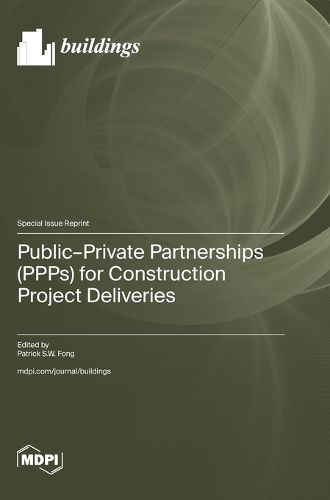
Public-Private Partnerships (PPPs) are central to modern infrastructure development, enabling governments to harness private sector finance and expertise for complex construction projects. Their success, however, depends on managing risks, stakeholder alignment, financial viability, and sustainability. This reprint compiles eighteen peer-reviewed papers from a Special Issue of the journal Buildings, curated by Dr. Patrick S.W. Fong, offering global insights into the mechanisms, challenges, and success factors shaping PPPs. Topics include the historical evolution of PPP research, policy dynamics (e.g., China), project initiation and planning (e.g., business case development in China and New Zealand, project briefing in mature markets, success factors in the UAE, and competency models), risk management (e.g., assessment systems for transport, qualitative tools like 'Riesgo', risks in Iran's water sector, and sustainable outcomes), and performance drivers (e.g., trust, incentives in rail transit, success factors in water and power sectors, and concession period drivers in healthcare). It also explores contextual applications such as urban regeneration (Italy) and community resilience. Covering regions from Asia to Europe and the Middle East, and sectors from transport to utilities and health, this volume delivers a comprehensive, evidence-based understanding of PPPs for academics, policymakers, practitioners, and students navigating the complexities of infrastructure delivery through public-private collaboration.
$9.00 standard shipping within Australia
FREE standard shipping within Australia for orders over $100.00
Express & International shipping calculated at checkout
Stock availability can be subject to change without notice. We recommend calling the shop or contacting our online team to check availability of low stock items. Please see our Shopping Online page for more details.
This title is printed to order. This book may have been self-published. If so, we cannot guarantee the quality of the content. In the main most books will have gone through the editing process however some may not. We therefore suggest that you be aware of this before ordering this book. If in doubt check either the author or publisher’s details as we are unable to accept any returns unless they are faulty. Please contact us if you have any questions.
Public-Private Partnerships (PPPs) are central to modern infrastructure development, enabling governments to harness private sector finance and expertise for complex construction projects. Their success, however, depends on managing risks, stakeholder alignment, financial viability, and sustainability. This reprint compiles eighteen peer-reviewed papers from a Special Issue of the journal Buildings, curated by Dr. Patrick S.W. Fong, offering global insights into the mechanisms, challenges, and success factors shaping PPPs. Topics include the historical evolution of PPP research, policy dynamics (e.g., China), project initiation and planning (e.g., business case development in China and New Zealand, project briefing in mature markets, success factors in the UAE, and competency models), risk management (e.g., assessment systems for transport, qualitative tools like 'Riesgo', risks in Iran's water sector, and sustainable outcomes), and performance drivers (e.g., trust, incentives in rail transit, success factors in water and power sectors, and concession period drivers in healthcare). It also explores contextual applications such as urban regeneration (Italy) and community resilience. Covering regions from Asia to Europe and the Middle East, and sectors from transport to utilities and health, this volume delivers a comprehensive, evidence-based understanding of PPPs for academics, policymakers, practitioners, and students navigating the complexities of infrastructure delivery through public-private collaboration.
Search our extensive online catalogue.
