Readings Newsletter
Become a Readings Member to make your shopping experience even easier.
Sign in or sign up for free!
You’re not far away from qualifying for FREE standard shipping within Australia
You’ve qualified for FREE standard shipping within Australia
The cart is loading…


This title is printed to order. This book may have been self-published. If so, we cannot guarantee the quality of the content. In the main most books will have gone through the editing process however some may not. We therefore suggest that you be aware of this before ordering this book. If in doubt check either the author or publisher’s details as we are unable to accept any returns unless they are faulty. Please contact us if you have any questions.
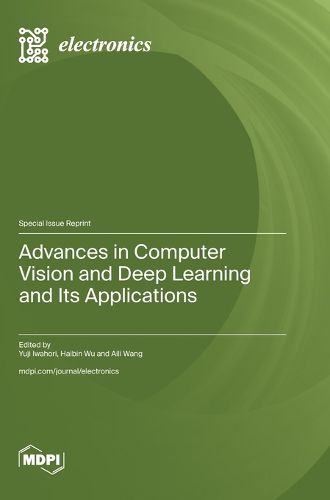
The aim of this Reprint is to immerse the reader in the latest findings regarding image-processing technology. Currently, image-processing technology is at the core of artificial intelligence, with the aim being to design computer programs that can achieve or mimic human-like intelligence in terms of perception and inference in the real world. With the rapid development of visual sensors and imaging technologies, image analysis and pattern recognition techniques have been extensively applied in various artificial-intelligence-related fields, ranging from industry and agriculture to surveillance, social security, and beyond. Up to now, image-processing technology based on deep learning has rapidly developed and become the most successful applied intelligent technology. Pattern recognition is an important research field in image processing and includes image preprocessing, feature extraction and selection, classifier design, and classification decisions. This Reprint covers advancements in ten research directions: computer vision; feature extraction and image selection; pattern recognition for image-processing techniques; image processing in intelligent transportation; neural networks; machine learning and deep learning; biomedical image processing and recognition; image processing for intelligent surveillance; deep learning for image processing, robotics, and unmanned systems; and AI-based image processing, understanding, recognition, compression, and reconstruction.
$9.00 standard shipping within Australia
FREE standard shipping within Australia for orders over $100.00
Express & International shipping calculated at checkout
Stock availability can be subject to change without notice. We recommend calling the shop or contacting our online team to check availability of low stock items. Please see our Shopping Online page for more details.
This title is printed to order. This book may have been self-published. If so, we cannot guarantee the quality of the content. In the main most books will have gone through the editing process however some may not. We therefore suggest that you be aware of this before ordering this book. If in doubt check either the author or publisher’s details as we are unable to accept any returns unless they are faulty. Please contact us if you have any questions.
The aim of this Reprint is to immerse the reader in the latest findings regarding image-processing technology. Currently, image-processing technology is at the core of artificial intelligence, with the aim being to design computer programs that can achieve or mimic human-like intelligence in terms of perception and inference in the real world. With the rapid development of visual sensors and imaging technologies, image analysis and pattern recognition techniques have been extensively applied in various artificial-intelligence-related fields, ranging from industry and agriculture to surveillance, social security, and beyond. Up to now, image-processing technology based on deep learning has rapidly developed and become the most successful applied intelligent technology. Pattern recognition is an important research field in image processing and includes image preprocessing, feature extraction and selection, classifier design, and classification decisions. This Reprint covers advancements in ten research directions: computer vision; feature extraction and image selection; pattern recognition for image-processing techniques; image processing in intelligent transportation; neural networks; machine learning and deep learning; biomedical image processing and recognition; image processing for intelligent surveillance; deep learning for image processing, robotics, and unmanned systems; and AI-based image processing, understanding, recognition, compression, and reconstruction.
Search our extensive online catalogue.
